
 +91-9210-914-391
 WhatsApp

 Book Appointment
Vision Therapy in Delhi: Eye Exercises That Fix Reading, Focus & Lazy Eye Problems
If a child uses a finger to read, loses their place constantly, or struggles with homework despite "20/20 vision" on a chart — the problem often isn't how clearly they see, but how well their eyes work together. Save Sight Centre is a top-rated Vision Therapy and Rehabilitation Centre in Delhi NCR, using structured eye exercises to retrain the eye-brain connection for children and adults alike.
🔎 Quick Answer: What Is Vision Therapy?
Vision therapy is a structured, doctor-supervised program of eye exercises designed to correct how the eyes and brain work together — not just how clearly you see. It's prescribed after a comprehensive eye exam confirms an underlying visual skill problem, such as poor eye teaming, focusing difficulty, or lazy eye (amblyopia), and typically uses tools like Brock string, prisms, filters, and computer-based programs over several weeks to months. At Save Sight Centre, a top-rated Vision Therapy and Rehabilitation Centre in Delhi NCR, our team also provides vision rehabilitation — a separate service that helps people with permanent low vision or vision loss adapt, using assistive technology, activities-of-daily-living training, and counselling support.
What Do You Need to Know Before Starting Vision Therapy?
Vision therapy is different from "eye exercises" you'd do on your own — it's individually prescribed and monitored based on standardised test results.
A child can have perfectly clear 20/20 vision and still have a significant visual skills problem affecting reading and learning.
Children often progress faster in vision therapy, since the visual system and brain are more neuroplastic — able to change and adapt — at younger ages.
Vision therapy and vision rehabilitation are two different services — therapy improves visual skills; rehabilitation helps people adapt to permanent low vision.
Programs typically run for several weeks to several months, combining in-office sessions with home reinforcement exercises.
Common signs include using a finger to track words while reading, frequent headaches, avoiding near work, and losing your place often.
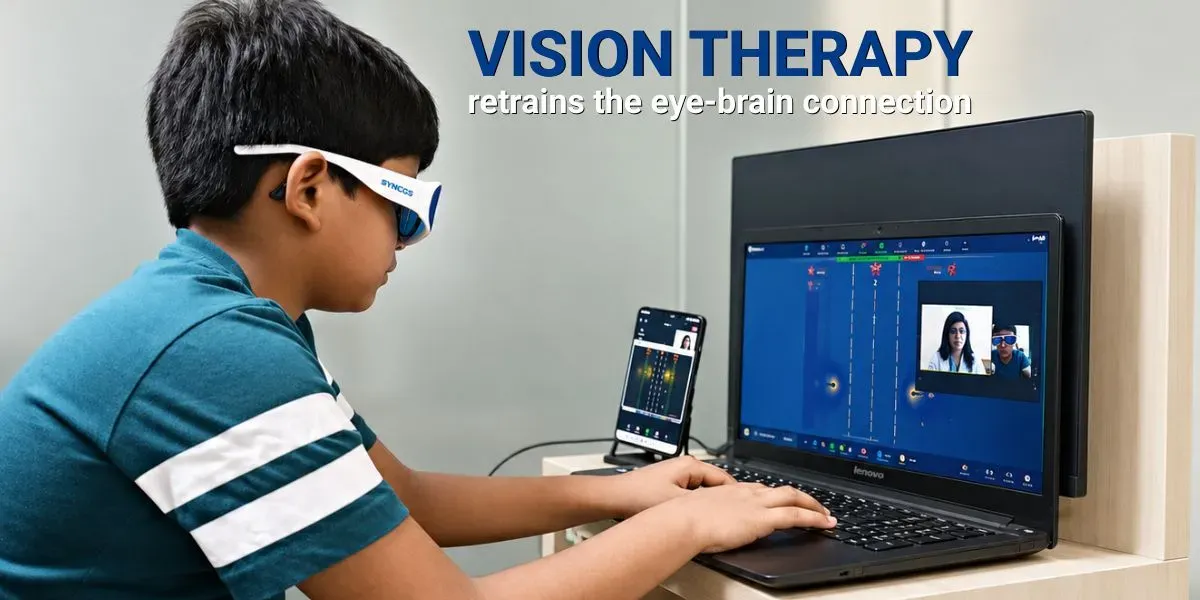
What Is Vision Therapy and How Is It Different From Wearing Glasses?
Vision therapy is a sequence of activities individually prescribed and monitored by a vision therapist to develop efficient visual skills and processing. It's only recommended after a comprehensive eye examination shows that a genuine visual skills problem — not just a refractive error — is affecting how someone sees, reads, or functions day to day.
Glasses correct how clearly light focuses on the retina. Vision therapy addresses something different: how well your two eyes team together, how efficiently your eyes track and focus, and how accurately your brain processes what your eyes are sending it. You can have perfect glasses and still struggle if these underlying visual skills aren't working efficiently.
The vision therapy program is based on standardized test results, the patient's specific signs and symptoms, and their individual needs — it's a structured medical program, not a generic set of eye exercises found online.
What Are the Signs Someone May Need Vision Therapy?
⚠ Watch for these warning signs:
- Using a finger to keep their place while reading
- Frequently losing their place, skipping lines, or re-reading the same line
- Headaches or eye strain during or after reading or screen time
- Avoiding reading or near work whenever possible
- Double vision, especially during close-up tasks
- Poor reading comprehension despite adequate effort and intelligence
- Difficulty copying from the board, or notes that don't match what was written
- Clumsiness or poor hand-eye coordination in sports
Who should get evaluated for Vision Therapy?
- Children with reading or learning difficulties, even with normal vision on a standard eye chart
- Anyone with symptomatic double vision or eye strain during near work
- People who spend long hours on screens and experience regular eye fatigue
- Children diagnosed with amblyopia (lazy eye) or strabismus (squint)
- Adults recovering from a concussion, stroke, or other brain injury affecting vision
Who Needs Vision Therapy?
While almost everyone can benefit from more efficient vision, certain people especially benefit from this type of care:

Lazy Eye (Amblyopia)
Reduced vision or suppression in one eye, where the brain favours the stronger eye. Vision therapy strengthens the weaker eye and improves how the two eyes work together.
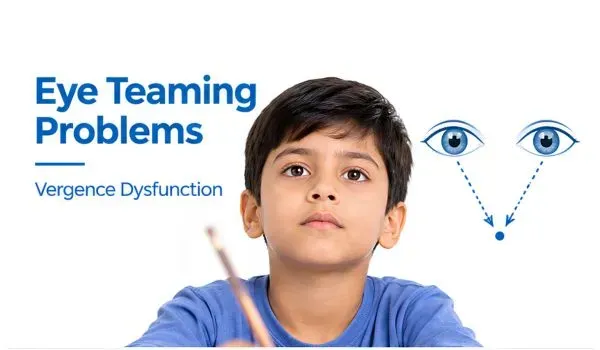
Eye Teaming Problems
The eyes struggle to team together properly (fusional vergence dysfunction), often causing double vision, eye strain, or discomfort, especially during near work.

Computer Vision Syndrome
Difficulty focusing comfortably during screen use, causing headaches, blurred vision, and fatigue after extended near work on computers or devices.
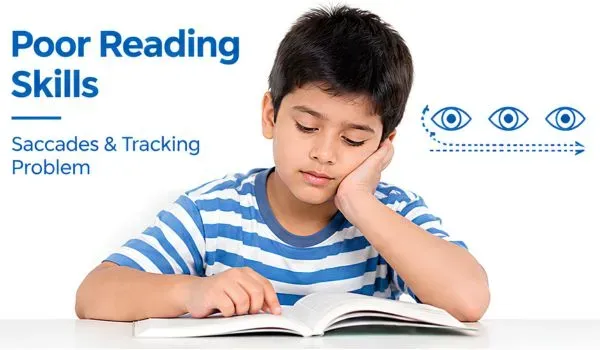
Poor Reading Skills
Difficulty smoothly tracking words across a line of text, often leading to using a finger as a marker, losing one's place, and slow, effortful reading.
What Is Vision Rehabilitation, and How Is It Different From Vision Therapy?
Vision rehabilitation is a separate but related service — instead of developing visual skills in people with otherwise treatable vision, it helps people with permanent low vision or vision loss maximize their remaining vision, adapt to visual loss, and restore independence:
ADL (Activities of Daily Living) Training
Occupational therapists help people adjust everyday routines, teaching self-care skills like cooking, grooming, and medication management with reduced vision.
Assistive Technology
Screen readers, speech-to-text software, electronic magnifiers, and other adaptive tools help with reading, writing, and accessing digital information.
Counselling & Support
Rehabilitation counsellors offer emotional support and guidance, helping people cope with vision loss, emotional challenges, and connect with community support.
Vocational Rehabilitation
Support with career guidance, job placement, and workplace modifications, helping visually impaired individuals pursue employment and education.
What Tools and Techniques Are Used in Vision Therapy?
Vision therapy uses a specific set of therapeutic tools — think of it as a structured "gym workout" for the eyes and brain — each targeting a different visual skill:
Brock String
A simple string with coloured beads used to train the eyes to converge and diverge accurately together, directly targeting eye-teaming problems.
Vectograms & Mirror Stereograms
Specialized polarised images and mirror-based devices that train binocular fusion and depth perception through controlled visual targets.
Prisms, Filters & Lenses
Therapeutic prisms and specialised lenses are used during sessions to challenge and progressively strengthen the eyes' focusing and teaming ability.
Flippers & Aperture Rule
Lens flippers rapidly alternate focusing demand to build accommodative flexibility, while the aperture rule trains precise eye alignment and convergence
Pegboard & O-Scope
Hand-eye coordination and fine visual-motor tools that reinforce the connection between what the eyes see and how the body responds.
Computer-Based Programs
Interactive, game-like software provides engaging, measurable practice for tracking, focusing, and processing skills, especially motivating for children.
How Does Vision Therapy Work?
Vision therapy is administered in the office under a vision therapist's guidance, reinforced with practice at home — the combination of both is what makes the improvement stick.
In-Office Therapy — Structured sessions, typically around 30 minutes each, using specific tools matched to the individual's diagnosed visual skill deficits.
Comprehensive Evaluation
Standardised tests identify exactly which visual skills — teaming, focusing, tracking — need to be developed, forming the basis of an individualised program.
Guided Therapy Sessions
A trained vision therapist guides the patient through progressively challenging exercises using tools like Brock string, vectograms, prisms, and flippers.
Progress Monitoring
Regular re-testing tracks improvement in the specific visual skills being targeted, and the program is adjusted as skills develop.
Home Reinforcement — Activities paralleling in-office techniques are taught to the patient to practice at home, reinforcing developing visual skills between sessions.
Brock String Practice
Simple, short daily practice at home reinforces the eye-teaming skills being built during in-office sessions.
Fusion Cards & Worksheets
Take-home materials give consistent, low-cost daily reinforcement of specific visual skills between clinic visits.
Consistency Is Key
Like physical therapy, vision therapy works best with consistent practice — skipping home exercises slows progress meaningfully.
What helps a vision therapy program succeed? Attend every session — consistency in office visits is essential for the structured, progressive nature of the program to work. Do home exercises daily — skipping home reinforcement significantly slows progress, treat it like a daily habit, not an optional extra. Stay patient and encouraging — improvement takes weeks to months, celebrate small wins along the way to keep motivation up, especially for children. Communicate openly — share any struggles or frustrations with the therapy team so the program can be adjusted as needed. Follow through to completion — stopping early, even after initial improvement, can mean skills don't fully consolidate, complete the full recommended program.
What Does a Vision Therapy Program Look Like Over Time?
What Helps a Vision Therapy Program Succeed?
Attend Every Session
Consistency in office visits is essential for the structured, progressive nature of the program to work.
Do Home Exercises Daily
Skipping home reinforcement significantly slows progress — treat it like a daily habit, not an optional extra.
Stay Patient and Encouraging
Improvement takes weeks to months — celebrate small wins along the way to keep motivation up, especially for children.
Communicate Openly
Share any struggles or frustrations with the therapy team so the program can be adjusted as needed.
Follow Through to Completion
Stopping early, even after initial improvement, can mean skills don't fully consolidate — complete the full recommended program.
Vision Therapy vs Glasses vs Surgery: What's the Real Difference?
These three approaches solve different problems — understanding the distinction helps set the right expectations:
| Basis | Vision Therapy | Glasses/Contacts | Eye Surgery |
|---|---|---|---|
| What It Fixes | How eyes/brain work together | How clearly light focuses | Structural eye problems |
| Approach | Active exercises over time | Passive, worn daily | One-time procedure |
| Best For | Teaming, focusing, tracking issues | Refractive errors | Cataract, retina, cornea issues |
| Duration of Process | Weeks to months | Ongoing daily wear | Single procedure + recovery |
What It Fixes
Approach
Best For
Duration of Process
Who Provides Vision Therapy and Rehabilitation at Save Sight Centre?
Vision therapy and rehabilitation work best with a coordinated, multi-disciplinary team — that's exactly what we bring together:
Conduct the comprehensive evaluation and design the individualized vision therapy program based on standardized test results.
Help vision-impaired individuals adjust everyday routines and build practical, independent living skills.
Support safe, confident movement and navigation for individuals adapting to significant vision loss.
Provide emotional support and guidance, helping patients and families cope with vision-related challenges.
How Much Does Vision Therapy Cost in Delhi?
Cost depends on the specific program length and complexity recommended after your evaluation:
| Vision Therapy & Rehabilitation Service | Cost |
|---|---|
| Comprehensive Vision Therapy Evaluation | Consultation charges apply |
| Vision Therapy Program (per course) | On assessment |
| Vision Rehabilitation Services | On assessment |
How Much Does Vision Therapy Cost in Delhi?
*Cost depends on the diagnosed condition, program length, and specific tools or technology used. Consultation and diagnostic test charges apply separately. Confirmed pricing is shared after your evaluation. No-cost EMI is available.
Frequently Asked Questions About Vision Therapy in Delhi
Vision therapy is a sequence of activities individually prescribed and monitored by a vision therapist to develop efficient visual skills and processing. It's recommended after a comprehensive eye exam confirms it's an appropriate treatment for the specific problem identified.
No. Vision therapy is a structured, individually prescribed medical program based on standardised testing and monitored by a trained vision therapist, using specific tools like Brock string, prisms, and computer programs — it's not the same as generic eye exercises found online.
Vision therapy is often used alongside patching therapy and glasses to treat amblyopia, particularly to improve how the two eyes work together (binocularity), which patching alone doesn't always address. Results vary by individual, and it works best when started early in childhood.
Depending on the severity of the diagnosed condition, programs typically range from several weeks to several months, involving a number of in-office visits combined with daily home reinforcement exercises.
No, vision therapy benefits people of all ages, though children often progress faster since their visual system and brain are more neuroplastic. Adults with computer vision syndrome, eye teaming problems, or vision issues after a brain injury can also benefit significantly.
Vision therapy can help when reading difficulties are caused by an underlying visual skills problem, such as poor eye tracking or teaming — not all learning difficulties are vision-related, but an evaluation can determine if vision is a contributing factor in a specific case.
Vision therapy develops and improves specific visual skills like eye teaming and focusing in people with otherwise treatable vision. Vision rehabilitation helps people with permanent low vision or vision loss adapt, using assistive technology, daily-living skills training, and counselling support.
Yes, vision therapy is commonly used to address computer vision syndrome, particularly focusing (accommodative) difficulties that cause headaches, blurred vision, and fatigue during extended screen use. Learn more about computer vision syndrome →
No, vision therapy is not painful. Sessions involve guided exercises using specialised tools, and some patients may notice mild, temporary eye fatigue during a session, similar to how a muscle feels after exercise, which resolves quickly.
Watch for signs like using a finger to read, frequent headaches during near work, avoiding reading, losing their place often, or reversing letters. A comprehensive eye evaluation is the only reliable way to confirm whether vision therapy is appropriate.
No, vision therapy addresses a different problem than glasses or surgery. Glasses correct refractive errors and surgery addresses structural eye problems, while vision therapy improves visual skills like teaming and focusing — many patients need a combination, not a substitute.
A typical session, often around 30 minutes, involves guided exercises using tools like Brock string, vectograms, prisms, lenses, or computer-based programs, specifically chosen to target the visual skills identified in your evaluation.
Vision therapy is a recognised treatment approach for specific, diagnosed visual skill deficiencies like eye teaming and focusing problems, prescribed based on standardised testing. Its effectiveness depends on an accurate diagnosis and consistent participation in the prescribed program.
Yes, vision rehabilitation and vision therapy techniques are often used to help adults recovering from a stroke, concussion, or other brain injury that has affected their visual processing, eye teaming, or tracking abilities.
Cost depends on the diagnosed condition and the length of the program recommended for you or your child. Consultation charges apply for the initial evaluation, and the full program cost is confirmed after that assessment at Save Sight Centre.
Find Out If Vision Therapy Can Help
Book your consultation at Save Sight Centre, Delhi. Our expert team will help you understand your condition, recommend the right treatment and guide you through every step.