
 +91-9210-914-391
 WhatsApp

 Book Appointment
Cataract Surgery in Delhi: Advanced FLACS, Phaco & MICS for Clear, Lasting Vision
Cataract surgery is one of the safest, most effective procedures in modern medicine — and the technology and surgeon you choose directly shape your visual outcome. At Save Sight Centre, our cataract team, led by Dr. Rajeev Jain, Senior Cataract Surgeon, offers everything from standard Phaco and MICS to FLACS with the Z8 laser — a technology available nowhere else in North Delhi — along with expert guidance on the right IOL for your lifestyle.
🔎 Quick Answer: Cataract Surgery in Delhi
Cataract surgery removes the eye's clouded natural lens and replaces it with an artificial intraocular lens (IOL), restoring clear vision. At Save Sight Centre, a NABH and ISO accredited hospital opposite Adarsh Nagar Metro Station, the cataract team — led by Dr. Rajeev Jain, Senior Cataract Surgeon, who manages complicated and complex cases, along with Dr. Shuchi Gupta and Dr. Ankit Malhotra — has together performed over 50,000 cataract surgeries. Standard Phaco/MICS surgery starts around ₹20,000–₹50,000 per eye, while FLACS with the Z8 femtosecond laser — a technology available nowhere else in North Delhi — along with premium IOLs like toric, multifocal, and EDOF, range from ₹60,000–₹1,00,000+ per eye. No-cost EMI is available, and all major insurance companies, PSU, TPA, and government plans are accepted.
What Do You Need to Know Before Getting Cataract Surgery in Delhi?
Modern cataract surgery is quick (5–7 minutes per eye), minimally invasive, and doesn't require the cataract to "ripen" before treatment.
Save Sight Centre is the only hospital in North Delhi offering FLACS with the Z8 femtosecond laser — a more precise, blade-minimized approach to cataract removal.
Dr. Rajeev Jain, Senior Cataract Surgeon with 20+ years of experience, personally manages complicated and complex cataract cases.
Choosing the right IOL — monofocal, toric, multifocal, or EDOF, has a bigger impact on your day-to-day vision than the surgical technique itself.
No-cost EMI is available, and all major insurance companies, PSU, TPA, and government plans are accepted at Save Sight Centre.
Most patients see clear improvement within days and are fully recovered within a few weeks, with no overnight hospital stay required.
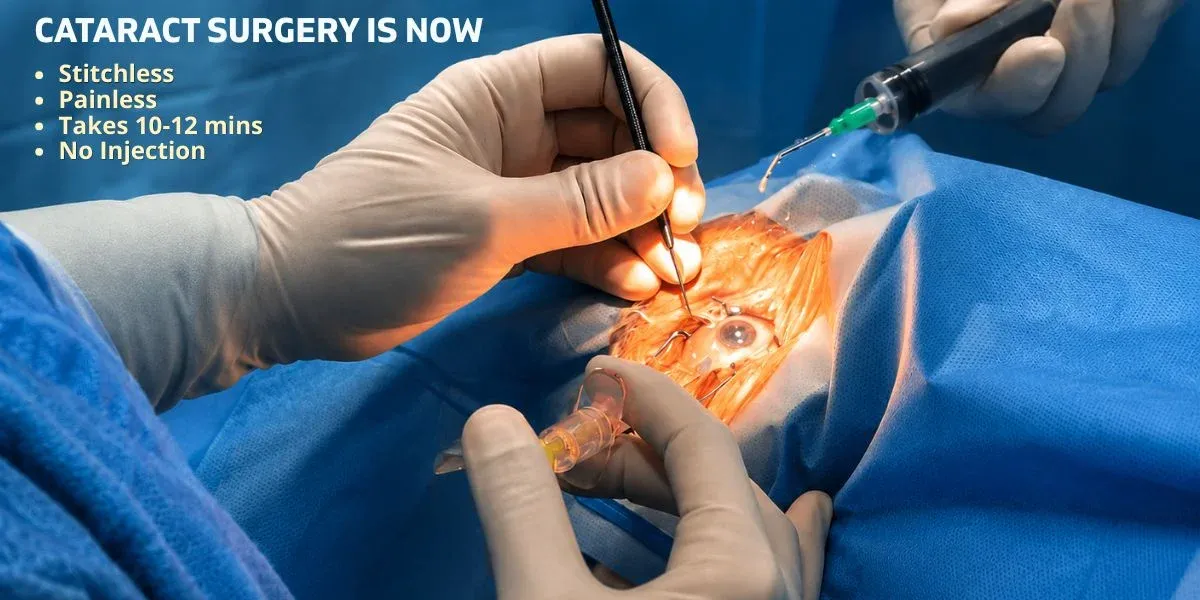
What Is a Cataract and What Causes It?
A Cataract is a clouding of the eye's natural lens, which sits behind the iris and normally focuses light sharply onto the retina. As the lens becomes cloudy, less light reaches the retina and vision gradually becomes blurred, dim, or hazy — much like looking through a fogged-up window.
A Cataract can occur in anyone, but certain factors increase the chances of developing one:
- Ageing is the most common cause, as the natural lens undergoes gradual, inevitable wear and tear over time
- Serious trauma or penetrating injury to the eye can cause the lens to lose transparency at an early age
- Excessive, prolonged exposure to UV radiation without proper eye protection can accelerate cataract development
- Diabetes, especially with poorly controlled blood sugar, can cause cataracts to develop faster and denser
- Smoking and excessive alcohol consumption are major risk factors for cataract and other eye disorders
- Long-term steroid use, both topical and oral, can cause early cataract formation
What Are the Symptoms of Cataract?
You may have a cataract if you notice the following changes in your vision:
⚠ Watch for these warning signs:
- Cloudy, blurry, or dim vision — a major symptom of cataract.
- Difficulty with night vision, especially while driving, due to glare and lack of contrast.
- Increased sensitivity to light and glare, making headlights and sunlight uncomfortable.
- Needing brighter light for reading or close-up work.
- Frequent changes in your glasses or contact lens prescription.
- Colours appearing faded or yellowed.
- Double vision in one eye, caused by uneven focusing.
What are the Causes of Cataract?
A cataract can occur in anyone, but certain factors increase the chances of developing one:
- Ageing is the most common cause, as the natural lens undergoes gradual, inevitable wear and tear over time.
- Trauma or Eye Injury — Serious trauma or penetrating injury to the eye can cause the lens to lose transparency at an early age.
- UV Radiation Exposure — Excessive, prolonged exposure to UV radiation without proper eye protection can accelerate cataract development.
- Diabetes, especially with poorly controlled blood sugar, can cause cataracts to develop faster and denser.
- Smoking & Alcohol Consumption — Smoking and excessive alcohol consumption are major risk factors for cataract and other eye disorders.
When is the right time for cataract surgery?
- When blurred vision starts affecting daily activities — reading, night driving, cooking, or working
- When other eye issues like diabetic retinopathy or glaucoma become harder to monitor due to the cataract blocking the view
- Cataract surgery no longer needs the lens to "mature" or "ripen" — it can be done safely at any stage, in consultation with your doctor
What Types of Cataract Surgery Are Available in Delhi?
The right technique depends on your cataract's density, your eye's anatomy, and any additional complications. Save Sight Centre offers the full range, from standard Phaco to advanced laser-assisted surgery:
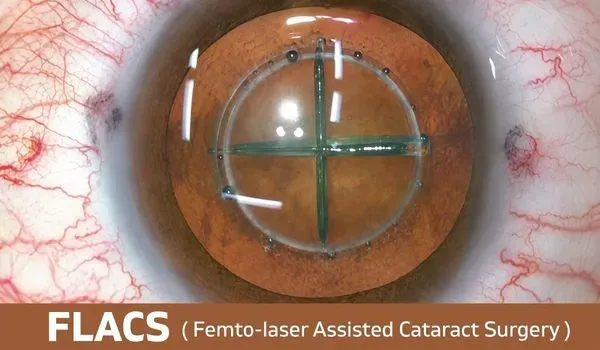
FLACS with Z8 Laser
A femtosecond laser performs the most critical, precision-dependent steps of surgery — available at Save Sight Centre with the Ziemer Z8 platform, nowhere else in North Delhi.
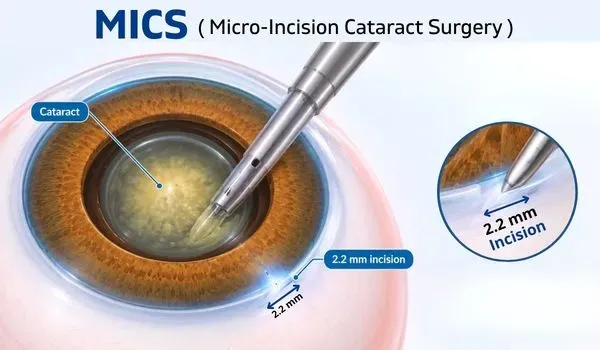
MICS (Micro-Incision Surgery)
An advanced, more sophisticated form of Phaco performed through an even smaller incision — less tissue disruption, quicker visual recovery, and reduced post-operative astigmatism.
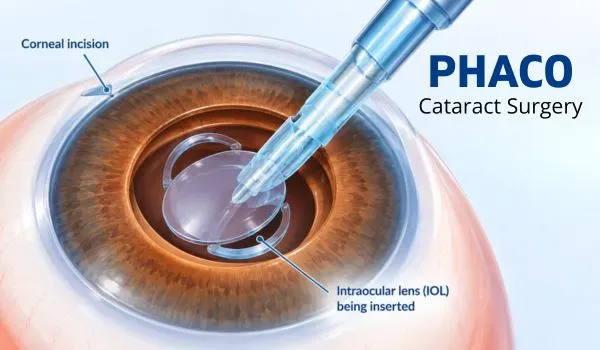
Phacoemulsification (Phaco)
Ultrasound energy breaks the cloudy lens into tiny fragments, which are removed through a very small incision. The same incision is used to implant a foldable IOL — fast recovery, minimal discomfort.
What Makes FLACS with the Z8 Laser Different?
Femtosecond Laser-Assisted Cataract Surgery (FLACS) with the Ziemer FEMTO LDV Z8 is currently available only at Save Sight Centre in North Delhi. Instead of performing the most delicate steps of cataract surgery entirely by hand, the Z8 laser completes them with computer-guided precision before phacoemulsification begins.
Laser-Precision Capsulotomy
The Z8 creates a perfectly round, centred opening in the lens capsule — more consistent and reproducible than a fully manual capsulotomy, which supports better IOL centration and stability.
Gentler Lens Fragmentation
The laser pre-softens and fragments the cloudy lens before removal, which can reduce the ultrasound (phaco) energy needed during surgery — gentler on delicate internal eye structures.
Liquid Patient Interface
The Z8's proprietary liquid interface causes minimal rise in eye pressure during docking and results in less redness after surgery compared to older suction-based laser platforms.
Precise Astigmatism Correction
The Z8 can create highly accurate arcuate incisions to help correct pre-existing astigmatism at the time of cataract surgery — particularly valuable when paired with a toric IOL.
Mobile, Purpose-Built Platform
The Z8 is a compact, mobile femtosecond laser designed specifically for both corneal and cataract applications, allowing it to be used seamlessly within the same operating suite.
Ideal for Select Complex Cases
The added precision of FLACS can be particularly valuable in select denser cataracts and cases where minimising manual manipulation of the eye is a priority — discussed with you individually.
What Are the Different Types of IOLs (Intraocular Lenses)?
Since cataract surgery replaces your natural lens permanently, choosing the right intraocular lens (IOL) has a direct, lasting impact on your quality of vision and how dependent you remain on glasses:
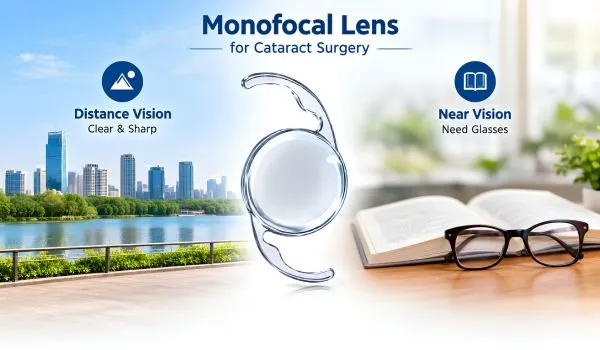
Provides clear, sharp vision focused at one constant distance, usually distance vision. Reliable and well-proven, though reading glasses are typically still needed for close-up tasks.
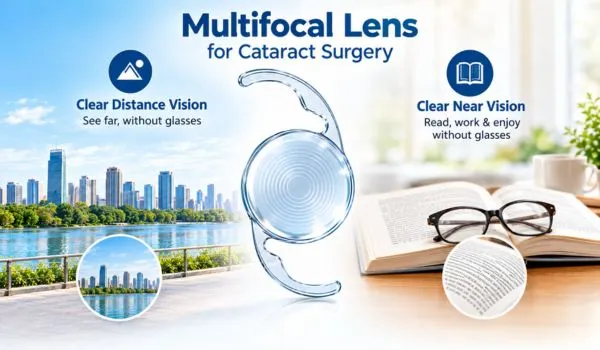
Focuses light at multiple points — near, intermediate, and distance — significantly reducing dependence on glasses for daily activities. Mild glare or halos may occur initially and typically fade.
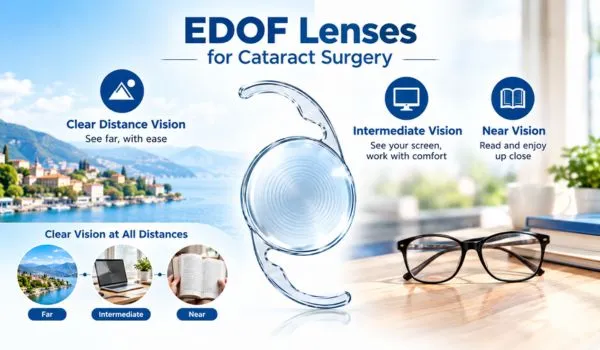
Offers a continuous range of vision with better intermediate focus for driving and computer use, with fewer visual disturbances like glare or halos than some multifocal designs.
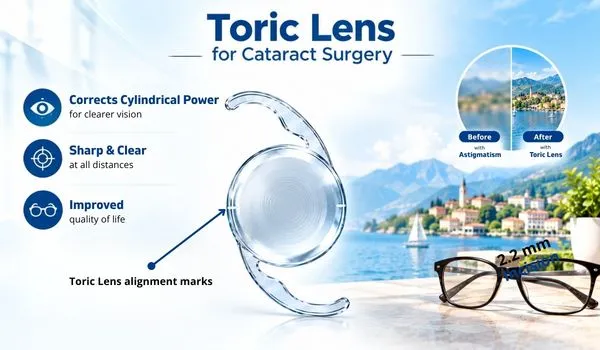
Corrects astigmatism at the same time as cataract removal, addressing the cornea's irregular shape for sharper, more stable vision and reduced dependence on cylindrical glasses.
How Is Cataract Surgery Performed Step by Step?
The overall flow is similar for both approaches — the key difference is whether the critical early steps are performed manually or with laser precision.
Standard Phaco / MICS — All steps are performed manually by the surgeon using precision surgical instruments and an ultrasound (phaco) probe. This remains an excellent, well-proven approach for the vast majority of cataracts.
Pre-Operative Preparation
The eye is cleansed and sterilised, then numbed with local anaesthetic drops to make the entire procedure painless.
Manual Incision & Capsulotomy
The surgeon creates a small incision and a precise circular opening in the lens capsule using fine surgical instruments.
Phacoemulsification
Ultrasound energy breaks the cloudy lens into tiny fragments, which are gently removed by suction through the small incision.
IOL Implantation & Closure
A foldable IOL is inserted through the same incision, which is typically self-sealing and needs no stitches.
FLACS with Z8 — The femtosecond laser performs the capsulotomy, lens fragmentation, and incisions with computer-guided precision before phacoemulsification, reducing the amount of manual manipulation and ultrasound energy needed.
Docking & Imaging
The eye is gently docked to the Z8's liquid patient interface, and the laser's built-in OCT imaging maps your eye's exact anatomy in real time.
Laser Capsulotomy & Fragmentation
The laser creates a precisely centred capsulotomy and pre-softens/fragments the cataract, and can also create arcuate incisions to correct astigmatism.
Gentle Phacoemulsification
With the lens already fragmented by the laser, less ultrasound energy is typically needed to remove the pre-softened lens material.
IOL Implantation & Closure
Your chosen IOL — monofocal, toric, multifocal, or EDOF — is precisely positioned within the laser-created capsulotomy for optimal centration.
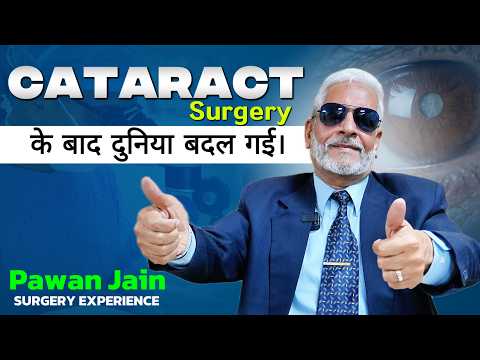
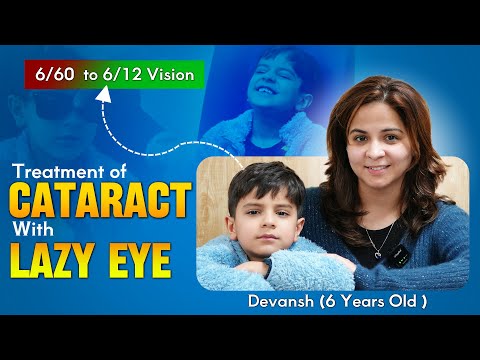
What Do Our Cataract Patients Say? Listen to the Experienced Patients


What Should You Do After Cataract Surgery?
Use Prescribed Eye Drops
Take prescribed eye drops regularly and on schedule to prevent infection and control inflammation during healing.
Use a Protective Eye Shield
Wear the protective shield while sleeping, and avoid rubbing or pressing on the operated eye at all times.
Avoid Heavy Lifting
Avoid strenuous physical effort and lifting heavy objects for the short-term recovery period as advised by your surgeon.
Keep Dust & Water Away
Protect your eye from dust and water getting in during the initial healing period to reduce infection risk.
Attend Follow-Up Visits
Most patients see significant improvement within days, with full healing over several weeks — follow-ups confirm everything is on track.
Who Handles Complicated Cataract Surgery in Delhi?
Not every cataract is straightforward. Some cases need a surgeon with deep experience in managing added complexity — this is where Dr. Rajeev Jain, Senior Cataract Surgeon, personally takes the lead.
✓ Complex cases Dr. Rajeev Jain manages:
- Dense, mature, or brunescent (very hard) cataracts requiring extra surgical precision
- Subluxated or dislocated lenses, often due to trauma or weak zonules
- Cataracts combined with glaucoma, requiring combined surgical planning
- Cataracts in patients who have previously undergone retina/vitrectomy surgery
- Post-traumatic cataracts following eye injury
- Cataract surgery in patients with prior corneal or refractive surgery
⚠ Why complex cases need specialist experience:
- Weak zonules or unstable lens support can complicate standard technique
- Prior eye surgery changes the eye's internal anatomy and healing response
- Combined conditions like glaucoma need a coordinated surgical plan
- A denser cataract requires more refined control of ultrasound energy
- Managing these cases well protects both safety and visual outcome
Monofocal vs Toric vs Multifocal vs EDOF: Which IOL Is Right for You?
Each IOL type is a trade-off between simplicity, cost, and how independent you'll be from glasses after surgery.
| Basis | Monofocal | Toric | Multifocal / EDOF |
|---|---|---|---|
| Corrects Astigmatism | No | Yes | Only in toric-multifocal combos |
| Distance Vision | Excellent | Excellent | Excellent |
| Near/Intermediate Vision | Needs glasses | Needs glasses | Reduced glasses dependence |
| Glare/Halo Risk | Very low | Very low | Mild, usually fades |
| Relative Cost | Lowest | Moderate | Highest |
Corrects Astigmatism
Distance Vision
Near/Intermediate Vision
Glare/Halo Risk
Relative Cost
What Are the Risks of Cataract Surgery?
Cataract surgery is one of the safest surgical procedures performed today, with a very high success rate. Here's an honest overview of the risks involved:
Mild Discomfort & Watering
Slight grittiness, watering, or light sensitivity is common for a few days after surgery and resolves with prescribed drops.
Posterior Capsule Opacification (PCO)
The lens capsule behind the IOL can become cloudy months or years later, causing blurry vision — easily treated with a quick, painless laser procedure.
Elevated Eye Pressure
A temporary rise in eye pressure can occur post-surgery and is monitored and managed with medication when needed.
IOL Dislocation
In rare cases, the implanted lens can shift from its intended position, which may need a minor corrective procedure.
Infection or Bleeding
As with any intraocular surgery, infection or bleeding is possible but rare at accredited centres following strict sterile protocols and post-op antibiotic care.
How Much Does Cataract Surgery Cost in Delhi?
Cataract surgery cost in Delhi varies widely depending on the surgical technique (MICS or FLACS) , the type of IOL selected (Monofocal, Multifocal, etc), surgeon experience, and hospital infrastructure. Here's a transparent overview at Save Sight Centre.
| Cataract Surgery Type / Lens | Cost (Per Eye) |
|---|---|
| FLACS (Femtosecond Laser-Assisted) with Z8 | ₹60,000 – ₹1,00,000+ |
| Standard Phaco / MICS with Monofocal IOL | ₹15,000 – ₹50,000 |
| Toric IOL (Astigmatism Correction) | ₹44,000 – ₹1,20,000 |
| Multifocal / Trifocal IOL | ₹70,000 – ₹1,20,000+ |
| EDOF IOL | ₹55,000 – ₹1,00,000+ |
| Complicated / Complex Cataract Surgery | On assessment |
How Much Does Cataract Surgery Cost in Delhi?
*Prices are indicative and vary based on your specific diagnosis, lens choice, and technique used. Consultation and diagnostic test charges apply separately. Confirmed pricing is shared after your evaluation.
Who Is the Best Cataract Surgeon in Delhi?

Dr. Rajeev Jain
Dr. Rajeev Jain is widely regarded as the best cataract surgeon in Delhi, with 20+ years of experience and over 50,000 cataract surgeries performed at Save Sight Centre. He personally manages complicated and complex cataract cases and patients with retinal problems.

Dr. Shuchi Gupta
Dr. Shuchi Gupta is a leading cataract and glaucoma specialist in Delhi with 20+ years of practice at Save Sight Centre. She is known for precise phacoemulsification technique and for guiding patients through the right IOL choice based on their lifestyle and eye health.

Dr. Ankit Malhotra
Dr. Ankit Malhotra is a skilled cataract surgeon in Delhi with 8+ years of practice at Save Sight Centre, specialising in phacoemulsification and anterior segment surgery. He is valued by patients for clear communication and consistent, dependable surgical outcomes.
Frequently Asked Questions About Cataract Surgery
Modern cataract surgery is minimally invasive and not painful. It's performed under local or topical anaesthesia with numbing drops, so most patients feel only mild pressure, not pain, and are comfortable throughout the procedure with same-day discharge.
The average duration of cataract surgery is about 5–7 minutes per eye. Total time at the hospital is not long, and it does not require an overnight stay, allowing for a quick recovery at home.
Cataract surgery is recommended when vision problems begin to affect everyday activities like reading, driving, or working — not based on a specific age. You don't need to wait until the cataract has "matured" or worsened significantly.
Common symptoms include blurred or cloudy vision, difficulty with night vision, glare sensitivity, frequent changes in glasses prescription, and colours appearing faded or yellowed. If you notice these regularly, visit an ophthalmologist for evaluation.
Cataract is diagnosed through a comprehensive eye examination, including visual acuity testing, eye pressure measurement, and a dilated eye exam to closely examine the lens, optic nerve, and retina.
No, cataracts do not return once removed, since the natural lens is permanently replaced with an artificial IOL. Some patients may later develop posterior capsule opacification (PCO), which causes similar blurry vision but is easily treated with a quick laser procedure.
Most patients notice improved vision within 24 to 48 hours, though complete visual recovery can take a few weeks depending on your eye's healing and any underlying conditions. Normal activities can usually be resumed gradually within days.
Standard Phaco performs all steps of surgery manually using ultrasound energy and surgical instruments. FLACS uses a femtosecond laser — the Z8, available only at Save Sight Centre in North Delhi — to perform the capsulotomy and lens fragmentation with computer-guided precision before phacoemulsification, which can reduce the ultrasound energy needed during surgery.
There's no single "best" IOL — the right choice depends on your lifestyle, work profile, night driving habits, and how comfortable you are with wearing glasses for some tasks. Monofocal is reliable for distance vision, toric corrects astigmatism, and multifocal/EDOF options reduce overall glasses dependence.
Yes, cataract surgery is generally safe for diabetics, though good blood sugar control before and after surgery supports better healing. Diabetics often develop cataracts faster, so surgery is frequently recommended earlier once vision starts affecting daily life.
Most surgeons prefer to operate on one eye first, allow it to heal, and then treat the second eye a short interval later, though this is decided case-by-case. This staged approach lets your surgeon confirm a good outcome in the first eye before proceeding.
Yes, cataract surgery is typically covered by health insurance since it's considered medically necessary. All major insurance companies, PSU, TPA, and government plans are accepted at Save Sight Centre — our team can help you understand your specific coverage.
An untreated cataract continues to worsen over time, progressively affecting vision and quality of life, and in advanced stages can become harder and riskier to remove. It can also make it more difficult to monitor other eye conditions like diabetic retinopathy or glaucoma.
Look at years of experience, surgical volume, hospital accreditation (NABH/ISO), range of technologies offered (including FLACS), and IOL options available. Dr. Rajeev Jain at Save Sight Centre has 20+ years of experience and personally manages complicated and complex cataract cases.
See the World Clearly Again! Book Appointment Today
Book your consultation at Save Sight Centre, Delhi. Our expert team will help you understand your condition, recommend the right treatment and guide you through every step.