
 +91-9210-914-391
 WhatsApp

 Book Appointment
Oculoplastic Surgery in Delhi: Expert Eyelid, Tear Duct & Orbital Care
When it comes to your eyes, both function and appearance matter. At Save Sight Centre, oculoplastic surgery is led by Dr. Rwituja Thomas Grover, a fellowship-trained orbit and oculoplastics surgeon — whether you're dealing with a droopy eyelid, blocked tear duct, orbital condition, or want a more refreshed appearance, every treatment plan is personally designed around your specific eyes and goals.
🔎 Quick Answer: Oculoplastic Surgery in Delhi
Oculoplastic surgery, also known as ophthalmic plastic and reconstructive surgery, is a specialised branch of ophthalmology focused on the structures surrounding the eye — the eyelids, tear ducts, eye sockets (orbits), and nearby facial areas. It treats both functional problems, like droopy eyelids (ptosis), blocked tear ducts, and orbital tumors, and cosmetic concerns like under-eye bags or sagging eyelid skin. At Save Sight Centre, a NABH and ISO accredited hospital opposite Adarsh Nagar Metro Station, this care is led by Dr. Rwituja Thomas Grover, who completed her fellowship in Orbit, Oculoplastics, and Ocular Oncology at Narayana Nethralaya Eye Institute, Bangalore, and holds FICO (UK), MRCS (Edinburgh), and FAICO (Oculoplastics) qualifications.
What Do You Need to Know Before Getting Oculoplastic Surgery in Delhi?
Oculoplastic surgery covers the eyelids, tear ducts, and orbit — separate from, though closely related to, general eye surgery like cataract or LASIK.
Dr. Rwituja Thomas Grover is fellowship-trained in Orbit, Oculoplastics, and Ocular Oncology from Narayana Nethralaya Eye Institute, one of India's premier eye institutes.
Many oculoplastic conditions — like ptosis or a blocked tear duct — affect both vision and comfort, not just appearance.
Modern oculoplastic techniques prioritise minimal, well-hidden scarring for a natural post-surgical appearance.
Children can also have oculoplastic conditions, such as congenital ptosis, which need age-appropriate care and monitoring.
Every treatment plan is personally designed around the individual patient's specific anatomy and goals, whether functional, cosmetic, or both.
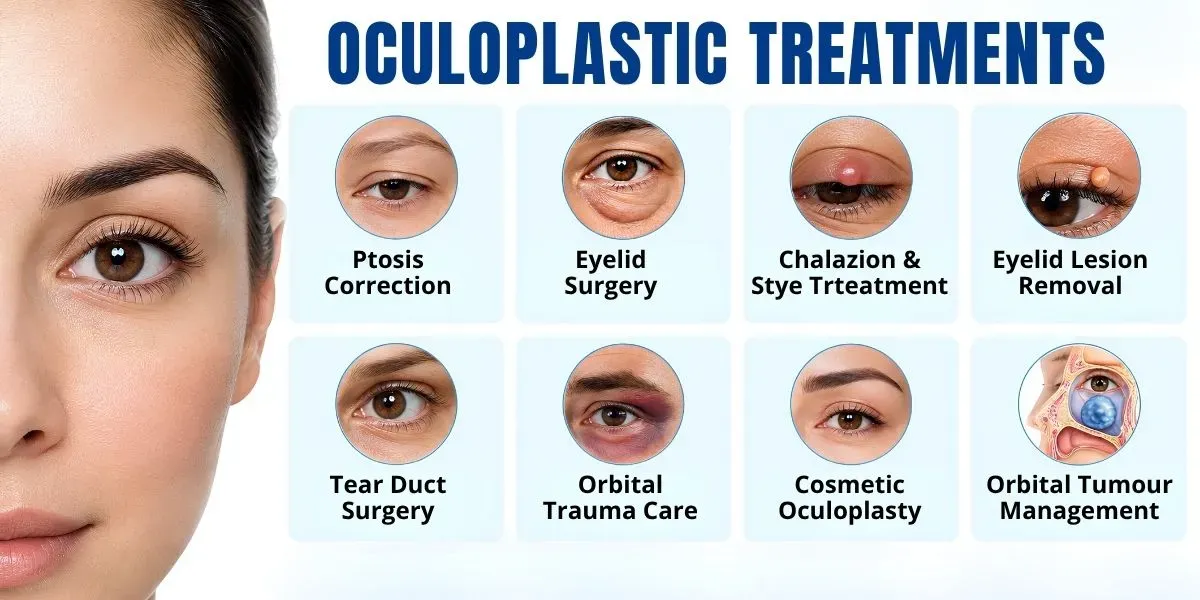
What Is Oculoplastic Surgery?
Oculoplastic surgery, formally known as ophthalmic plastic and reconstructive surgery, is a specialised branch of ophthalmology that focuses on the structures surrounding the eyes — the eyelids, eye sockets (orbits), tear ducts, and adjacent facial areas. It sits at the intersection of ophthalmology and plastic surgery, requiring surgeons with training in both fields.
These procedures fall into two broad categories: functional, where surgery restores comfort, protects vision, or corrects a structural problem (like a droopy eyelid blocking vision, or a blocked tear duct causing constant watering); and cosmetic, where surgery refreshes appearance and addresses aging or aesthetic concerns around the eyes. Many patients need a combination of both — for example, eyelid surgery that both improves vision and creates a more refreshed appearance.
Because oculoplastic surgeons train in both eye anatomy and facial plastic surgery, they're uniquely positioned to protect vision while also delivering natural, well-proportioned aesthetic results.
What Symptoms Suggest You May Need Oculoplastic Care?
⚠ Watch for these warning signs:
- A drooping upper eyelid that affects your appearance or vision
- Persistent eye watering, or a constantly "runny" eye
- Eyelashes turning inward and rubbing against the eye
- Sagging or puffy eyelid skin that makes you look tired
- A visible lump, swelling, or growth near the eye or eyelid
- Difficulty fully closing or opening the eyelid
- Recurrent eye infections or irritation without an obvious cause
Risk Factors for Oculoplastic Surgery
- If drooping eyelids are starting to interfere with your peripheral vision
- If tearing or watering is persistent and affecting daily comfort
- If you've had recent trauma or injury near the eye or eyelid
- If a growth or lump near the eye is new, changing, or concerning
- If you're considering cosmetic eyelid rejuvenation for a refreshed appearance
What Conditions Does Oculoplastic Surgery Treat?
Save Sight Centre provides comprehensive oculoplastic care across the full range of eyelid, tear duct, and orbital conditions:
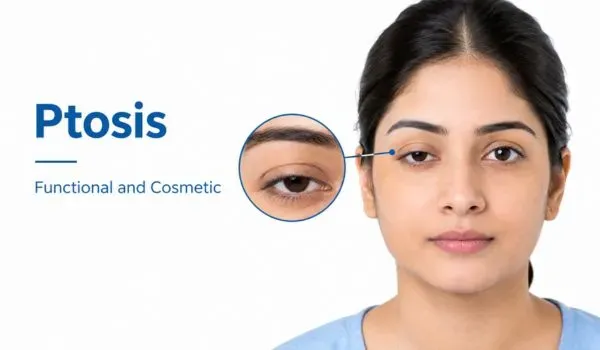
Ptosis
A drooping upper eyelid that may affect appearance or block the field of vision.
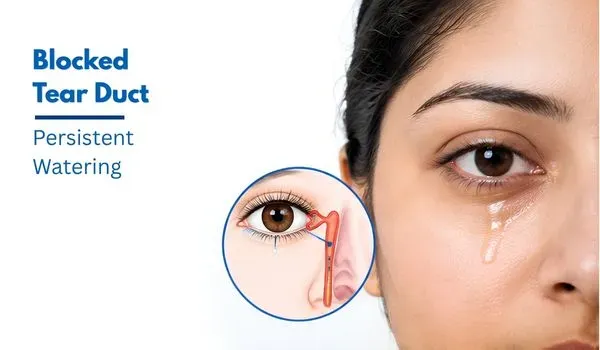
Blocked Tear Duct
Tear duct surgery restores drainage when watering is caused by blockage.
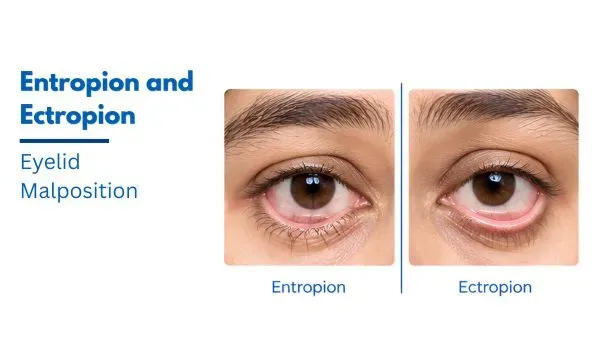
Entropion and Ectropion
Eyelid repositioning protects the ocular surface and relieves irritation.
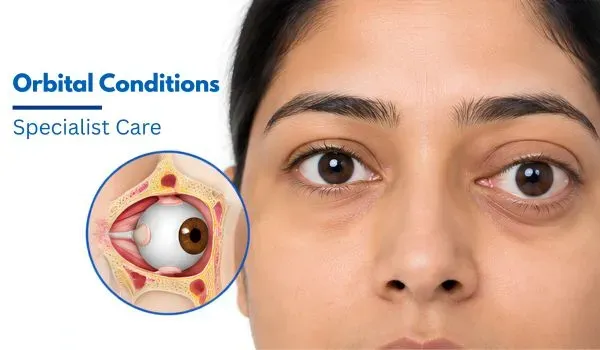
Orbital Conditions
Imaging-led assessment and treatment for conditions affecting the eye socket.
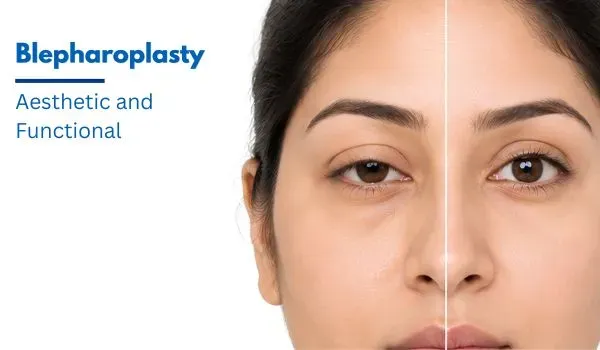
Blepharoplasty
Removes excess skin and fat from upper or lower eyelids when appropriate.
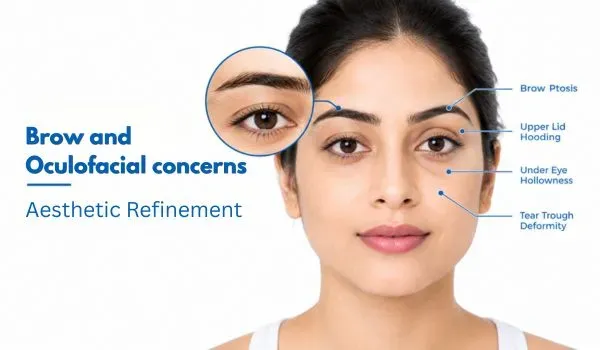
Brow and Oculofacial Concerns
Balanced procedures around the eyes designed around facial anatomy.
What Tests Are Done Before Oculoplastic Surgery?
A thorough evaluation ensures the right procedure is planned for your specific anatomy and concern:
Comprehensive Eye Examination
Assesses vision, ocular surface and the overall health of the eye.
Eyelid Function Testing
Measures eyelid height, muscle strength and movement.
Tear Duct Assessment
Checks drainage and identifies the site of any blockage.
Imaging for Orbital Conditions
CT or MRI may be used to assess the orbit and surrounding structures.
Photographic Documentation
Records eyelid position, asymmetry and progress for treatment planning.
Overall Health Review
Reviews medical history, medicines and anaesthesia suitability.
How Is Oculoplastic Surgery Performed?
Oculoplastic procedures broadly fall into functional and cosmetic categories, though many patients benefit from elements of both in a single treatment plan.
Functional Procedures — Functional procedures restore comfort, protect the ocular surface or improve the visual field.
Ptosis Repair
Tightens or repositions the eyelid-lifting muscle.
Tear Duct Surgery (DCR)
Creates a new drainage pathway for a blocked tear duct.
Entropion/Ectropion Correction
Repositions the eyelid margin to its normal position.
Cosmetic and Aesthetic Procedures — Aesthetic procedures are planned around facial anatomy to achieve natural, balanced results.
Blepharoplasty
Removes excess skin and fat from upper and/or lower eyelids.
Brow Lift
Repositions a heavy or drooping brow.
Oculofacial Aesthetic Procedures
Provides complementary refinements around the eyes.
Recovery Timeline After Oculoplastic Surgery
Pre & Post Procedure Care
Skipping Cold Compresses
Use cold compresses as advised in the first days to control swelling and bruising effectively.
Strenuous Activity
Avoid heavy lifting and strenuous exercise for the period advised by your surgeon to protect healing tissue.
Sun Exposure Without Protection
Protect healing skin and scars from direct sun exposure, which can affect scar appearance during recovery.
Rubbing the Eyes
Avoid touching or rubbing the treated area to protect healing tissue and reduce infection risk.
Missing Follow-Up Visits
Regular follow-up confirms proper healing and allows early management of any concerns during recovery.
Functional vs Cosmetic Oculoplastic Surgery: What's the Difference?
Understanding this distinction helps set the right expectations for your procedure and recovery:
| Feature | Oculoplastic Surgery | Functional | Cosmetic |
|---|---|---|---|
| Main goal | Restore comfort, protection or vision | Correct a functional problem | Refresh appearance naturally |
| Example conditions | Ptosis, watering, entropion | Blocked tear duct or eyelid malposition | Excess skin, bags or brow heaviness |
| Assessment | Eye health and eyelid function | Visual field and ocular surface | Facial balance and aesthetic goals |
| Recovery | Varies by procedure | Follow-up protects function | Swelling and bruising settle gradually |
Main goal
Example conditions
Assessment
Recovery
What Are the Risks and Side Effects of Oculoplastic Surgery?
Oculoplastic surgery is generally very safe when performed by an experienced, fellowship-trained surgeon. Here's an honest overview of the risks
Swelling and bruising
Usually temporary and improves during the first week.
Dry eye or watering
Temporary surface symptoms may occur during healing.
Asymmetry
Small differences may remain or require review as healing settles.
Visible scarring
Incisions are planned in natural creases or hidden locations where possible.
Infection or bleeding
Uncommon complications require prompt medical attention.
Doctors for Oculoplastic Surgery

Dr. Rwituja Thomas Grover
Fellowship-trained in Orbit, Oculoplastics and Ocular Oncology at Narayana Nethralaya Eye Institute, Bangalore. She treats functional and cosmetic eyelid, tear duct and orbital conditions.
Frequently Asked Questions About Oculoplastic Surgery
It is a specialised branch of ophthalmology focused on the eyelids, tear ducts, eye sockets and nearby facial areas.
Cataract and LASIK surgery address the eye itself, while oculoplasty addresses eyelids, tear ducts and the orbit.
No. Ptosis repair and tear duct surgery are examples of primarily functional procedures.
Ptosis is a drooping upper eyelid treated by tightening or repositioning the eyelid-lifting muscle.
Visible swelling and bruising improve within the first week, while normal activities often resume within two to four weeks.
Functional blepharoplasty may be covered when medically necessary; purely cosmetic surgery is typically not covered.
Age-related narrowing, infection, inflammation, injury or previous sinus problems can contribute.
Yes. Congenital ptosis and tear duct blockage need age-appropriate care and vision monitoring.
Treatment depends on the type and location and may range from monitoring to surgical removal and reconstruction after imaging.
Anaesthesia prevents pain during surgery; mild discomfort, swelling and bruising afterward are managed with prescribed care.
Excess skin or muscle laxity generally needs surgery, while volume loss may sometimes be addressed with non-surgical options.
Entropion turns the eyelid inward and ectropion turns it outward; both can be corrected surgically.
Most patients can return to non-strenuous work within one to two weeks, depending on healing and the procedure.
Incisions are placed in natural creases or hidden locations where possible, and scars usually fade significantly.
Look for fellowship training, relevant qualifications, published work and experience with functional and cosmetic procedures.
Ready to Book Your Oculoplastic Surgery Consultation?
Book your consultation at Save Sight Centre, Delhi. Our expert team will help you understand your condition, recommend the right treatment and guide you through every step.