
 +91-9210-914-391
 WhatsApp

 Book Appointment
Best Eye Doctor for Kids in Delhi: Complete Pediatric Ophthalmology Care
A child's vision shapes their learning, confidence, and development — and many eye problems in children show no obvious signs until they've already affected daily life. At Save Sight Centre, our pediatric ophthalmologists provide gentle, expert care for lazy eye, squint, refractive errors, and every stage of your child's visual development, in a friendly, child-focused environment.
🔎 Quick Answer: Best Eye Doctor for Kids in Delhi
A pediatric ophthalmologist is a medical eye doctor who specialises in diagnosing and treating eye conditions in infants, children, and adolescents — different from a general optometrist or a pediatrician, who aren't trained to manage complex eye disease. At Save Sight Centre, a NABH and ISO accredited hospital opposite Adarsh Nagar Metro Station, Dr. Himshikha Aggarwal, Consultant Ophthalmologist and Paediatric Eye Specialist with over 9 years of experience and a fellowship in Paediatric Ophthalmology and specializing in squint (strabismus) correction, congenital and pediatric cataract surgery, and preventive eye care for children up to 15 years old. Dr. Ankit Malhotra also examines kids with amblyopia and kids routine check up. Regular eye exams starting from infancy are the best way to protect your child's vision and development.
What Do You Need to Know Before Choosing an Eye Doctor for Your Child?
A pediatric ophthalmologist, not a general pediatrician or optometrist, is the right choice for complex eye conditions in children.
Dr. Himshikha Aggarwal is one of the best paediatric eye specialists in Delhi, treating children's eye diseases with child-friendly examination techniques. As a squint (strabismus) surgeon in Delhi, she corrects misaligned eyes in both children and adults using modern, precise surgical techniques. She also performs cataract surgery in children (including congenital cataracts) and adults.
Amblyopia (lazy eye) responds best to treatment when caught early — delayed treatment can lead to permanent vision loss in the weaker eye.
Many childhood vision problems, like squinting or sitting too close to screens, are easy to miss unless you know the warning signs to watch for.
Children should have their first comprehensive eye exam by 6 months, again at 3 years, and before starting school.
Treatment ranges from glasses and patching therapy to vision therapy and, when needed, squint or congenital cataract surgery.
What Is a Pediatric Ophthalmologist and Why Does Your Child Need One?
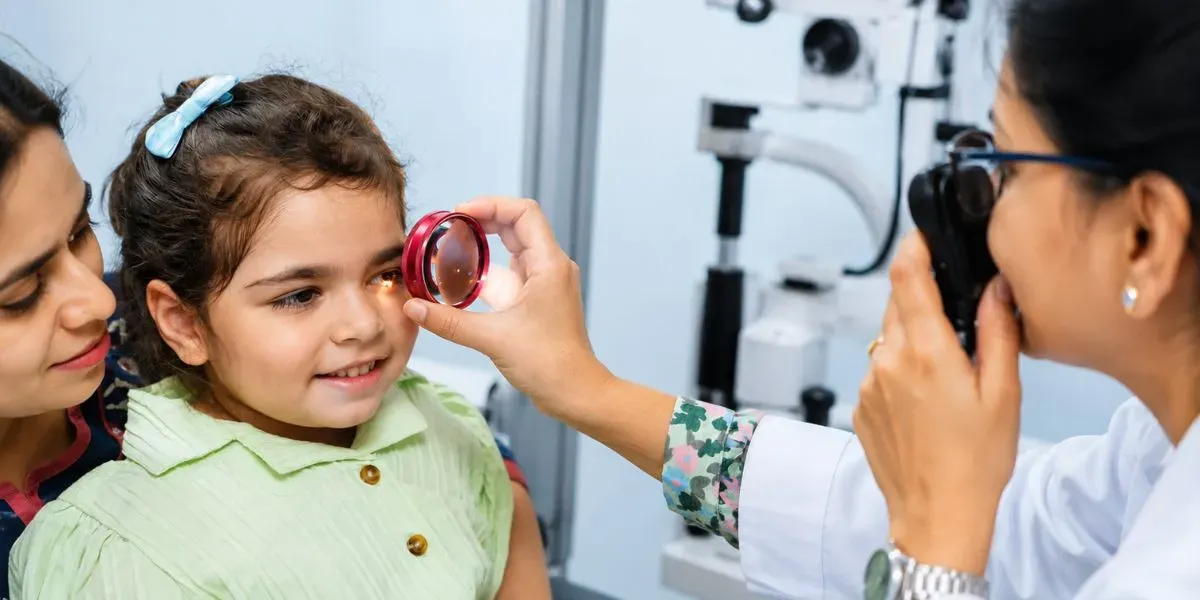
Pediatric ophthalmology is a specialised field focused on the eye health and vision care of infants, children, and adolescents. A pediatric ophthalmologist like Dr. Himshikha Aggarwal and Dr. Ankit Malhotra, diagnoses, treats, and manages children's eye problems, with particular attention to those below 15 years of age — a period when vision is still developing and problems can affect not just eyesight, but also education and social development.
It's a common question for parents: who should actually examine my child's eyes? A pediatrician can manage basic health issues, but is generally not trained to diagnose or treat complex eye disease. An optometrist can address routine vision problems like needing glasses. A pediatric ophthalmologist, however, is a medical doctor with specialised surgical and medical training specifically for the unique, developing eyes of children — making them the right choice whenever a more complex or persistent eye issue is suspected.
Choosing the right eye doctor for your child matters because their visual system is still developing. Conditions caught and treated early often resolve completely, while the same conditions left unaddressed can cause permanent visual impairment.
What Signs Show That Your Child Needs to See an Eye Doctor?
Young children often can't describe blurry or double vision — which is why parents and caregivers noticing behavioural clues matters so much.
⚠ Watch for these warning signs:
- Sitting too close to the TV or holding books very near the face
- Frequent eye rubbing (occasional rubbing is normal, but persistent rubbing may suggest strain)
- Frequent head tilting to change their viewing angle
- Headaches, especially after reading or screen time
- Difficulty with reading, attention, or academic performance at school
What Parents have to monitor at home?
- Check that your child's eyes are properly aligned, not turning inward or outward
- Notice if they hold books or objects too close or too far away
- Observe whether they make or avoid eye contact as expected for their age
- Keep track of any complaints about blurry vision, double vision, or trouble seeing the board
- Watch for redness or watering, which may suggest an underlying issue
What Are the Common Eye Problems in Children?
Understanding the most common childhood eye conditions helps you know what to watch for and when to seek care:
Refractive Errors
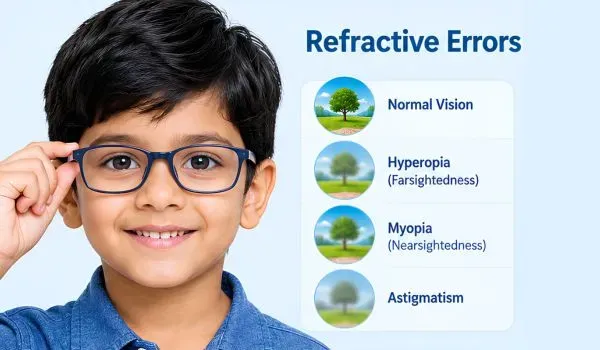
Myopia, hyperopia, and astigmatism occur when the eye's shape prevents light from focusing correctly on the retina, causing blurry vision. Genetics, environment, and eye strain all play a role.
Amblyopia (Lazy Eye)
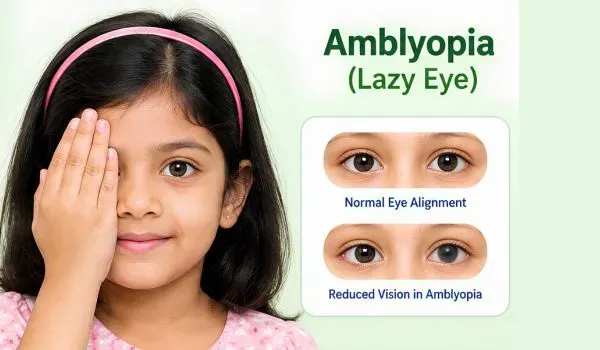
Amblyopia reduces vision in one eye when the brain favours the stronger eye. It's often caused by strabismus, cataracts, or uneven refractive errors between the two eyes in early development.
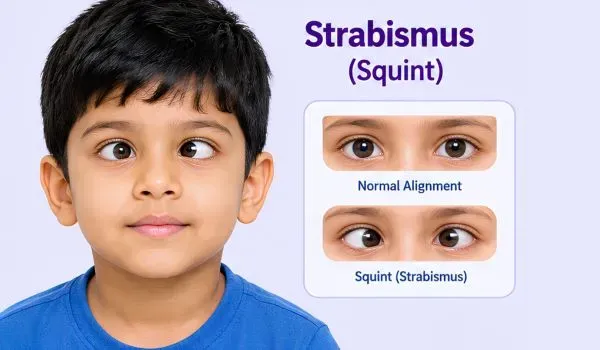
Strabismus (Squint)
In strabismus, the eyes point in different directions, from birth or due to eye muscle control difficulties later in infancy. Left untreated, it can cause double vision, eye strain, and amblyopia.
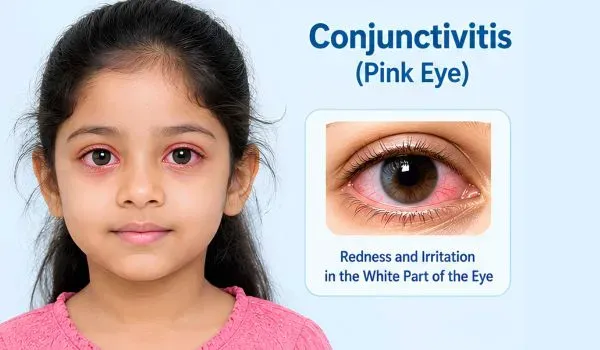
Conjunctivitis (Pink Eye)
Inflammation of the conjunctiva causing redness, irritation, discharge, and crusting — caused by viruses, bacteria, allergies, or irritants like chlorine and smoke.
What Foods Support Healthy Eyes in Children?
Nutrition plays a supporting role alongside medical care in your child's visual development:

Vitamin A-Rich Foods
Carrots and sweet potatoes are rich in Vitamin A, essential for good vision and protecting the cornea — a deficiency can lead to night blindness.

Omega-3 & Vitamin C/E Foods
Fatty fish like salmon supports visual development, while citrus fruits, berries, nuts, and seeds provide Vitamin C and E to protect the eyes from damage.

Leafy Greens & Eggs
Leafy greens like spinach and kale contain lutein and zeaxanthin, while eggs provide Vitamin A, lutein, and zinc — all supporting long-term retinal health.
What Conditions Can Vision Therapy Treat in Children?
Vision therapy strengthens the eyes and improves how the brain processes visual information through structured, supervised exercises — similar in concept to physical therapy, but targeted at the eyes and brain:
Amblyopia (Lazy Eye)
Strengthens the weaker eye and improves coordination between both eyes, often used alongside patching therapy.
Strabismus (Crossed Eyes)
Helps align the eyes and improve binocular vision, particularly for milder or residual misalignment after other treatment.
Convergence Insufficiency
Improves the ability to focus on close objects comfortably, reducing eye strain during reading and near work.
Eye Movement Disorders
Enhances the ability to track and follow moving objects smoothly, supporting reading fluency and sports performance.
Focusing Issues
Improves the ability to switch focus efficiently between near and distant objects, useful for children who struggle copying from the board.
Visual Processing Disorders
Enhances the brain's ability to interpret and understand visual information, benefiting academic performance and daily activities.
What Tests Are Done During a Child's Eye Exam?
A child's eye exam is adapted to their age and ability to cooperate, using both simple and specialised techniques:
Visual Acuity Testing
For older children, this uses a standard eye chart. For younger children who can't read, picture- or symbol-based charts assess how clearly they see.
Eye Alignment & Cover Test
Checks whether both eyes work together properly and points to signs of strabismus (squint), even subtle forms that aren't obvious to the naked eye.
Red Reflex Test
Shines a light into the eye to check the reflex from the retina, screening for serious conditions like congenital cataract or retinal abnormalities.
Retinoscopy
An objective way to measure a child's refractive error without needing them to respond verbally — especially useful for infants and very young children.
Synoptophore Testing
Used to assess binocular vision and eye coordination in detail, helping confirm a squint diagnosis and guide treatment before amblyopia develops.
Dilated Eye Examination
The pupils are dilated with drops so the specialist can examine the retina and back of the eye directly, ruling out structural problems.
How Are Children's Eye Problems Treated?
Treatment is chosen based on your child's specific condition, age, and severity — starting with the least invasive effective option.
Non-Surgical Treatment — The majority of childhood vision problems, including most refractive errors and many cases of amblyopia and mild squint, are effectively managed without surgery.
Glasses
Correcting refractive errors like myopia, hyperopia, or astigmatism relaxes eye strain and can also help realign eyes affected by certain types of squint.
Patching Therapy
Covering the stronger eye forces the brain to rely on and strengthen the weaker eye — the standard, well-proven treatment for amblyopia when caught early.
Vision Therapy
A structured program of eye exercises — like pencil push-ups, Brock string exercises, and computer-based programs — strengthens coordination and visual processing.
Surgical Treatment — Recommended when non-surgical measures aren't enough, or for conditions that need structural correction for the eye to develop normally.
Squint Surgery
Adjusts the eye muscles to correct misalignment when glasses or vision therapy alone don't achieve proper eye alignment, improving both appearance and binocular vision.
Congenital Cataract Surgery
Removes a clouded lens present from birth or early infancy — timing is critical, since delayed surgery can lead to permanent, severe amblyopia.
Surgery for Other Structural Conditions
Certain congenital eyelid or tear duct conditions may also need surgical correction, planned and timed specifically for a child's growth and development.
At What Age Should Children Get Their First Eye Exam?
What Should Parents Watch Out for to Protect Their Child's Eyes?
Excess Screen Time
Encourage regular screen breaks and outdoor time, which helps lower the risk of myopia progression in children.
Poor Reading Light
Ensure correct, adequate lighting when your child reads or studies to reduce unnecessary eye strain.
Ignoring Squinting
Don't dismiss frequent squinting or head tilting as a habit — these are often genuine signs of a vision problem.
Skipping Follow-Ups
Attend all scheduled follow-up visits during treatment — consistency matters most for conditions like amblyopia.
Delaying After Eye Injury
Any eye injury in a child needs prompt medical attention to prevent long-term harm, even if it looks minor.
What Happens If a Child's Eye Problem Is Left Untreated?
Childhood vision problems have a real, time-sensitive window for treatment — delays can have lasting consequences:
Permanent Amblyopia
Lazy eye left untreated past early childhood can result in permanently reduced vision in the weaker eye that no longer responds well to treatment.
Academic & Learning Difficulties
Undetected vision problems make it harder for children to read, focus, and follow along in class, sometimes mistaken for attention or learning issues.
Social & Behavioural Effects
Visible squint or poor vision can affect a child's confidence and social interactions if not addressed during their developing years.
Worsening Squint or Refractive Error
Untreated strabismus and refractive errors can progressively worsen, sometimes requiring more extensive treatment than if caught earlier.
Vision Loss from Missed Congenital Conditions
Conditions like congenital cataract or retinopathy of prematurity need prompt treatment in infancy — delayed diagnosis can lead to permanent, severe vision loss.
How Much Does a Pediatric Eye Consultation Cost in Delhi?
Cost depends on the type of consultation and treatment your child needs, from a routine screening to specialised treatment or surgery:
| Pediatric Eye Care Service | Cost |
|---|---|
| Comprehensive Pediatric Eye Exam | ₹800 |
| Vision Therapy Program | On assessment |
| Squint Surgery | ₹45,000 – ₹55,000 |
| Congenital Cataract Surgery | Starts from ₹30,000 |
How Much Does a Pediatric Eye Consultation Cost in Delhi?
*Vision Therapy Program pricing is confirmed after assessment based on your child's specific needs. Squint surgery and congenital cataract surgery costs may vary depending on complexity. No-cost EMI is available.
Who Is the Best Eye Doctor for Kids in Delhi?
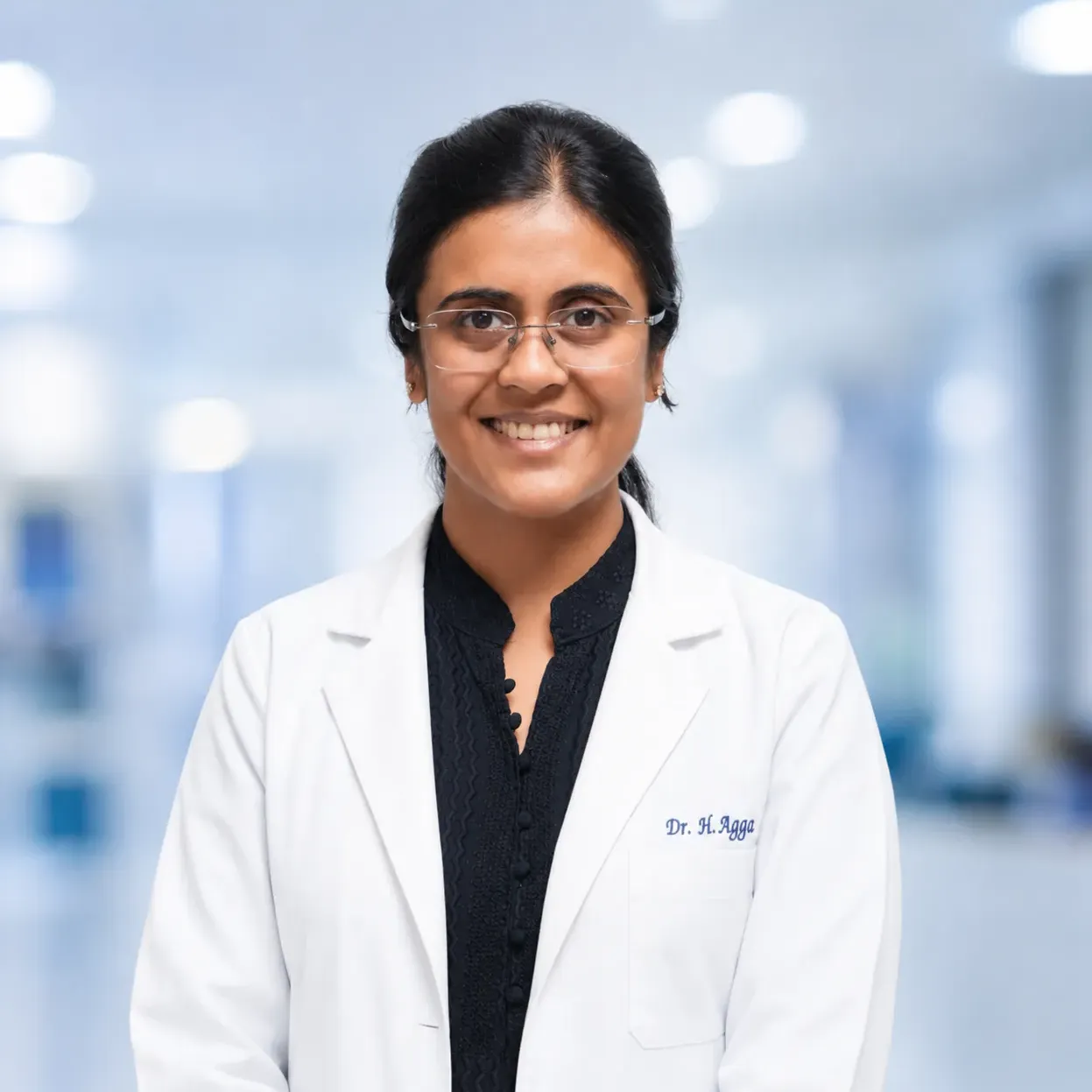
Dr. Himshikha Aggarwal
Dr. Himshikha Aggarwal is a paediatric eye specialist and squint surgeon in Delhi, practising at Save Sight Centre, A-14, G.T. Karnal Road, Adarsh Nagar, opposite Adarsh Nagar Metro Station, North Delhi. She is one of the best paediatric eye specialists in Delhi, treating children's eye diseases with child-friendly examination techniques. As a squint (strabismus) surgeon in Delhi, she corrects misaligned eyes in both children and adults using modern, precise surgical techniques. She also performs cataract surgery in children (including congenital cataracts) and adults.
View Profile →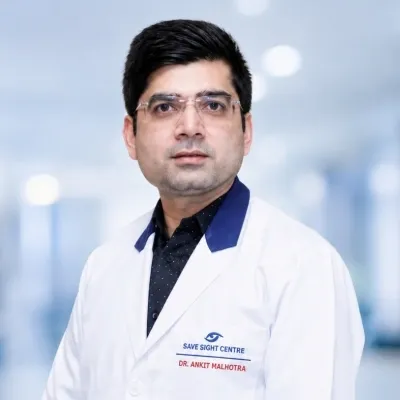
Dr. Ankit Malhotra
Dr. Ankit Malhotra is a Delhi-based eye specialist trusted for cataract surgery, LASIK and anterior segment. He also manages eye care in children like amblyopia and kids routine check-up. Trained at Maulana Azad Medical College (MAMC), Guru Nanak Eye Centre and Dr. Baba Saheb Ambedkar Medical College, he combines rigorous academic grounding with a calm, patient-first approach to eye care at Save Sight Centre.
View Profile →Frequently Asked Questions About Choosing the Best Eye Doctor for Kids in Delhi
A pediatric eye doctor, or pediatric ophthalmologist, is a medical doctor who diagnoses and treats children's eye diseases. They specialise in pediatric eye health, including the unique needs of a still-developing visual system in infants and children.
Pediatricians can manage basic health issues and screen for obvious eye problems, but they are typically not trained to diagnose or treat complex eye disease. For any specific eye concern, it's best to see a pediatric ophthalmologist or optometrist.
An optometrist can address typical, routine vision issues like needing glasses. A pediatric ophthalmologist is the right choice for complex eye diseases in children, including squint, amblyopia, and congenital eye conditions, since they have specialised medical and surgical training.
A child's eye test typically includes checking visual acuity, eye alignment, eye movement, and examining the overall health of the eyes. This can be done through simple methods like reading an eye chart, or more specialised exams like retinoscopy for children unable to read.
Pediatric orthoptics is a branch of eye care focused on diagnosing and treating eye movement disorders and conditions like strabismus (crossed or misaligned eyes). Orthoptists work with pediatric ophthalmologists to help manage these issues as part of a coordinated treatment plan.
Signs may include squinting, frequent eye rubbing, holding objects very close or far away, unusual eye movements, sensitivity to light, and complaints of blurred or double vision. If you notice these signs, consult a pediatric eye specialist promptly.
A red reflex check is done at birth, followed by a comprehensive exam around 6 months, again at 3 years, and before starting school. Annual eye exams are recommended from school age onward, with more frequent checks if there's a family history of eye conditions.
Mild, intermittent eye misalignment can be normal in the first few months of life as visual development matures. However, if it persists beyond 4 months, appears constant, or develops suddenly at any age, it should be evaluated promptly by a pediatric ophthalmologist.
Amblyopia responds best when treated during early childhood, while the visual system is still developing. Treatment becomes progressively harder and less effective with age, and full recovery in adults is uncommon, which is why early detection is emphasised so strongly.
Treatment usually starts with correcting any underlying refractive error with glasses, followed by patching therapy on the stronger eye to force the brain to use the weaker eye. Vision therapy exercises may also be added to strengthen coordination.
No, patching therapy is not painful. Some children find it frustrating at first since it temporarily reduces vision in their stronger eye, but with consistency and encouragement, most children adapt well within a few days to weeks.
Refractive errors like myopia can't always be prevented, since genetics play a strong role, but encouraging outdoor time, taking regular screen breaks, and using proper lighting when reading may help lower the risk or slow progression.
Squint surgery is considered when glasses, patching, or vision therapy alone don't achieve adequate eye alignment, or when the misalignment is significant enough to affect binocular vision or cause noticeable cosmetic concern.
There's no single universal limit, but pediatric eye specialists generally recommend regular breaks (such as the 20-20-20 rule: every 20 minutes, look at something 20 feet away for 20 seconds), balanced with adequate outdoor time to support healthy visual development.
Yes, pediatric eye surgeries like squint correction and congenital cataract surgery are generally safe when performed by an experienced pediatric ophthalmologist at an accredited hospital, with careful attention paid to anaesthesia and post-operative care specific to children.
Give Your Child the Gift of Clear Vision
Book your consultation at Save Sight Centre, Delhi. Our expert team will help you understand your condition, recommend the right treatment and guide you through every step.