
 +91-9210-914-391
 WhatsApp

 Book Appointment
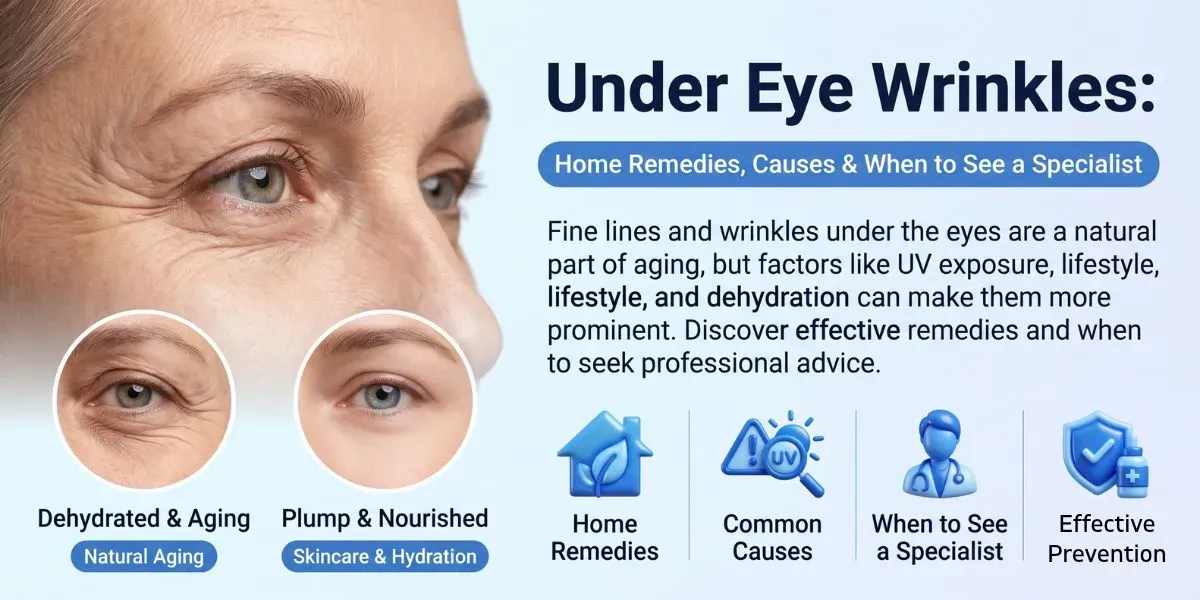
Under Eye Wrinkles: Home Remedies, Causes & When to See a Specialist
The skin under your eyes is the thinnest on your face, which is why fine lines show up here first. Here are the home remedies that genuinely help, the eye-safety precautions most beauty blogs skip, and when under-eye changes are more than just cosmetic.

Quick Answer
Under eye wrinkles form early because the skin there is thinner, has fewer oil glands, and moves constantly with blinking and expressions. Simple home remedies — aloe vera, coconut oil, cucumber, almond oil, cold compresses — can hydrate the area and soften early fine lines, but can't erase deep, established wrinkles. Because this skin sits right next to your eye, safety matters more here than anywhere else on your face — keep all products away from the lash line and eye surface.
Key Takeaways
- Under-eye skin is thinner and has no oil glands, so wrinkles appear here before the rest of the face.
- Home remedies help early, mild lines — not deep, established wrinkles.
- Keep every remedy and product away from the lash line — product in the eye can blur vision or clog eyelid glands.
- Chronic eye rubbing (often from allergies or dryness) quietly speeds up wrinkle formation.
- Significant eyelid skin sagging (dermatochalasis) can affect vision — that's a medical issue, not just cosmetic.
- Deep wrinkles need professional treatment: retinoids, peels, lasers or injectables.
Why Do Under Eye Wrinkles Appear So Early?
The skin under your eyes is thinner than skin anywhere else on your face and has almost no oil glands to keep it plump — so it shows age before other areas do. A few things speed this up:
- Collagen loss: collagen and elastin production naturally slow with age, so thin under-eye skin loses firmness fast.
- Sun and dehydration: UV rays break down collagen; dehydration reduces elasticity. Smoking, alcohol, poor sleep and long screen hours make it worse.
- Repeated movement: squinting, rubbing, and screen-strain expressions crease the skin repeatedly until lines become permanent.
- Eye rubbing from allergies or dryness: chronic itching from dry eyes or allergic conjunctivitis leads to frequent rubbing — a commonly overlooked driver of early under-eye wrinkles.
Wrinkles vs Fine Lines vs Crow's Feet vs Under-Eye Bags — What's the Difference?
Shallow, early creases, often only visible when you smile or squint. The easiest stage to improve with home care.
Deeper, more established lines visible even with a relaxed face — harder to reverse without professional treatment.
Fine lines that fan out from the outer corner of the eye, caused by repeated smiling and squinting.
Swelling, not wrinkling — caused by fluid retention, fat shifting, or poor sleep. A different issue needing different care.
Home Remedies for Under Eye Wrinkles That Actually Help
These can hydrate and soften early, fine lines — they won't erase deep, established wrinkles, but consistent use makes a real difference in texture and appearance.
Aloe Vera Gel
Apply a thin layer of fresh aloe vera under the eyes before bed, staying clear of the lash line. Rinse off in the morning.
Coconut Oil
Lightly tap one drop of coconut oil under the eyes at night, at least a centimetre from the lash line, to support moisture retention.
Chilled Cucumber Slices
Place chilled slices over closed eyes for 10 minutes. Hydrates the skin and temporarily tightens the area.
Almond Oil + Vitamin E
Gently pat a small amount under the eyes nightly, away from the lash line, for hydration and antioxidant support.
Cold Compress
A clean, cold compress over closed eyes for 5-10 minutes reduces puffiness and temporarily tightens skin.
⚠ Eye-Safety Precautions Most Guides Don't Mention
Because this skin sits right next to your eye, a few precautions matter more here than on the rest of your face:
- Never let product get into your eye — oils and creams in the eye can blur vision temporarily and irritate the surface.
- Keep remedies away from the lash line — oils near the eyelid margin can clog the tiny glands there, occasionally causing a stye or chalazion.
- Patch-test new ingredients on your inner arm first, especially essential oils or fragranced products.
- Stop immediately if you notice stinging, redness, swelling or blurred vision, and rinse thoroughly with clean water.
- If you have dry eyes or an active eye infection, check with a specialist before trying new eye-area products.
What Ingredients Should You Look For in an Eye Cream?
Draws in and holds moisture — good for hydration with minimal irritation risk.
Support the skin's natural collagen production over time, gently.
An antioxidant that helps protect against sun and pollution damage.
Temporarily reduces puffiness by constricting small blood vessels.
Retinol is effective for deeper lines but can irritate the sensitive eye area — start with a low strength, and only under guidance if your skin is sensitive.
Daily Habits That Help Prevent Under Eye Wrinkles
- Sun protection: UV-blocking sunglasses and eye-safe sunscreen daily — this matters more than any cream.
- Hydration and sleep: both support the skin's natural repair process.
- Stop rubbing your eyes: if allergies or dryness make you rub often, treat the underlying cause instead.
- Screen breaks: follow the 20-20-20 rule to reduce squinting and eye strain.
- Nutrition: vitamin C, omega-3s, zinc and antioxidants support collagen and skin resilience.
Home Remedies vs Professional Treatments
| Option | Best For | Permanence |
|---|---|---|
| Home remedies | Early, fine lines | Temporary, needs upkeep |
| Retinoid creams | Mild-moderate wrinkles | Improves with continued use |
| Chemical peels | Texture & tone | Gradual, repeat sessions |
| Laser resurfacing | Deeper wrinkles | Longer-lasting |
| Injectables/fillers | Established wrinkles | Months, needs repeats |
| Eyelid surgery | Sagging skin affecting vision | Long-lasting |
Professional options should be discussed with a qualified dermatologist or eye specialist based on your specific skin and eyes.
When Are Under Eye Changes More Than Just Cosmetic?
Most under-eye wrinkles are purely cosmetic. But watch for dermatochalasis — significant sagging of the upper eyelid skin, related but different from fine lines below the eye. If drooping skin starts to hang low enough to block part of your upper vision, that's a medical concern worth an eye specialist's evaluation, not just a skincare one. Persistent eye rubbing that's driving your wrinkles is also worth checking — it's often a sign of untreated allergies or dry eye that deserves proper treatment.
How Long Does It Take to See Results?
Hydration-based remedies (aloe vera, cucumber, cold compress) can visibly reduce puffiness and dryness within days. Improvements in fine lines from consistent nightly care typically take 4-8 weeks. Deep, established wrinkles won't meaningfully change with home care alone — professional treatment timelines vary by method.
Dr. Rajeev JainDirector · Retina, Cataract, LASIK & Uvea Specialist
"As eye specialists, our concern with under-eye remedies is always safety first — we regularly see mild eye irritation from products that migrated onto the eye surface overnight. Keep anything you apply well clear of the lash line. And if you're rubbing your eyes constantly, treat that itch or dryness — it's doing more damage to your skin than any cream can undo."
FAQs About Under Eye Wrinkles
Early, fine under-eye wrinkles can soften with consistent hydration, sun protection and healthy habits. Deeper, well-established wrinkles are generally permanent without medical or aesthetic treatment such as retinoids, lasers or injectables guided by a qualified specialist.
Early fine lines often improve with home care — hydration, sun protection and gentle remedies — but established, deeper wrinkles cannot be fully reversed without professional, dermatologist- or specialist-guided treatment.
Daily sun protection with UV-blocking sunglasses, adequate sleep and hydration, gentle skincare, avoiding eye rubbing, and taking regular breaks from screens all help slow early wrinkle formation around the eyes.
For sensitive skin, gentle moisturisers, mineral-based sunscreen, and doctor-supervised options like low-strength retinoids are generally safer than strong active ingredients or invasive procedures. Always patch-test new products and keep them well away from the lash line and eye surface.
Yes, if applied carefully — but oils and creams should be kept away from the lash line and never allowed to get into the eye itself. Product entering the eye can blur vision temporarily, irritate the surface, or clog the small oil glands along the eyelid margin, occasionally leading to a stye or chalazion.
Yes. Chronic eye rubbing, often driven by allergic conjunctivitis or dry eyes, repeatedly stresses the thin under-eye skin and can accelerate the formation of fine lines and wrinkles over time. Treating the underlying itch or dryness reduces the urge to rub and helps protect the skin.
There's no strict age requirement — many people start a light, hydrating eye cream in their mid-to-late 20s as a preventive habit, while others wait until fine lines are visible, often in their 30s. Sun protection is worth starting far earlier than any eye cream.
Under eye wrinkles themselves don't affect vision. However, significant sagging of the upper eyelid skin, a related but distinct condition called dermatochalasis, can droop low enough to obstruct the upper visual field in some people, which is a medical concern rather than a purely cosmetic one.
Avoid strong fragrances, essential oils, alcohol-based products, and high-strength active ingredients like undiluted retinoids or acids directly at the lash line, since the eye area is thin and sensitive. Always patch-test new products and stop immediately if you notice stinging, redness or blurred vision.
Most combine strict skincare and sun protection with professional treatments such as injectables, lasers, chemical peels or skin boosters performed under medical supervision, achieving controlled, gradual improvement rather than relying on home remedies alone.
Worried About Your Eye-Area Skin or Vision?
If eye rubbing, dryness or eyelid sagging is affecting your comfort or vision, get a proper eye check at Save Sight Centre, Adarsh Nagar, North Delhi.
Disclaimer: For general awareness only, not medical or dermatological advice. Always patch-test new products and consult a dermatologist for skincare guidance or an eye specialist at Save Sight Centre if you notice any change in vision, comfort or eyelid position. Results vary by person.