
 +91-9210-914-391
 WhatsApp

 Book Appointment
Sunken Eyes (Enophthalmos): Causes, Symptoms & Treatment Options
Sunken eyes happen when the eyeball and surrounding tissue sit deeper in the socket than normal, giving a hollow or tired look. Sometimes it's as simple as dehydration or poor sleep — other times it points to something that needs a specialist's attention.
Quick Answer
Sunken eyes, medically called enophthalmos, happen when the eye sits deeper in its socket, creating a hollow or gaunt look often paired with dark circles. Common causes include aging, dehydration, poor sleep, weight loss and genetics — usually harmless. Less commonly, trauma, chronic sinus disease, certain medications or, rarely, an underlying tumour can be the cause, which is why sudden or one-sided changes should always be checked by a doctor.
Key Takeaways
- Sunken eyes (enophthalmos) occur when fat, muscle or bone support around the eye is lost, allowing the eyeball to sit further back.
- Most cases are harmless and linked to aging, dehydration, poor sleep, weight loss or genetics.
- Doctors classify true enophthalmos into four types: traumatic, senile (age-related), silent sinus syndrome and congenital.
- Sudden, one-sided, or painful sunken eyes need prompt medical evaluation to rule out trauma, sinus collapse or, rarely, a tumour.
- Treatment ranges from hydration and sleep to dermal fillers, fat grafting, or orbital/sinus surgery, depending on the cause.
- Long-term glaucoma drop users should watch for gradual under-eye hollowing, a known side effect of some medications.
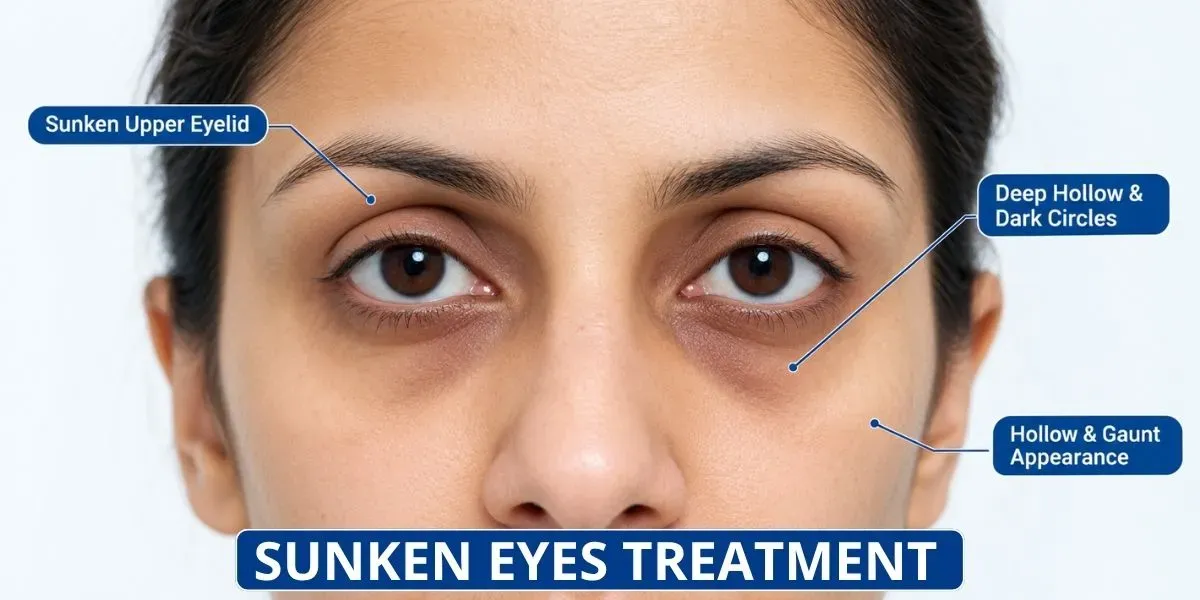
What Are Sunken Eyes (Enophthalmos)?
The medical term for sunken eyes is enophthalmos — from the Greek "en" (inward) and "ophthalmos" (eye). Your eyeball is normally held in place by a tight balance of fat pads, connective tissue, muscles and bone inside the eye socket. When any of these structures shrinks, erodes, fractures or scars, the eye loses its support and settles further back, giving the face a hollow, gaunt look, usually alongside visible dark circles.
It can be something you're born with (congenital) or something that develops later (acquired), and it can affect one eye or both. In children, the most common cause is dehydration from a stomach illness, which usually resolves quickly with fluids. In adults, the picture is more varied — aging, trauma, sinus problems, chronic disease and even certain medications can all play a role.
Sunken eyes vs. dark circles — what's the difference? Dark circles are a change in skin colour under the eyes. Sunken eyes are a change in the physical position and volume of the eye and surrounding tissue. They frequently show up together, because hollowing casts a shadow that makes the skin look darker — but treating dark circles alone (like with a brightening cream) won't fix true volume loss, and vice versa.
What Types of Sunken Eyes Do Doctors Diagnose?
True enophthalmos isn't one single condition — doctors classify it by cause, because the classification directly shapes the treatment plan.
Traumatic Enophthalmos
The most common type in adults — follows high-impact injuries (road accidents, falls, fights) that fracture the bones around the eye, especially the orbital floor.
Senile (Age-Related)
Develops naturally with age as orbital fat thins and the socket bones remodel — particularly common in postmenopausal women due to hormonal shifts.
Silent Sinus Syndrome
A chronic blockage of the maxillary sinus beneath the eye causes it to gradually collapse, pulling the orbital floor — and the eye — down and inward.
Congenital Enophthalmos
Present from birth, usually linked to facial-bone development conditions such as neurofibromatosis or other craniofacial syndromes.
| Type | Typical Cause | Who It Affects | Onset |
|---|---|---|---|
| Traumatic | Orbital fracture from injury | More common in men | Sudden, after injury |
| Senile | Age-related fat & bone loss | Common in postmenopausal women | Gradual, over years |
| Silent Sinus Syndrome | Chronic sinus blockage | Adults with sinus issues | Gradual, often unnoticed early |
| Congenital | Facial-bone development conditions | Present from birth | From early childhood |
What Causes Sunken Eyes?
Beyond the structural types above, most day-to-day sunken-eye complaints trace back to a handful of common, largely manageable causes:
Aging & Volume Loss
Fat and collagen around the eyes naturally decrease with age, and the skin thins and becomes more translucent — a gradual, near-universal cause.
Dehydration & Lifestyle
Not drinking enough water, poor sleep, dramatic weight loss, smoking, and too much alcohol or caffeine all reduce under-eye volume and skin elasticity.
Allergies & Sinus Issues
Allergic rhinitis ("allergic shiners") and sinus infections disrupt circulation and can pull the orbital floor inward over time with chronic congestion.
Trauma & Orbital Fracture
Injuries that fracture the bones around the eye can cause scarring or loss of support, shifting the eyeball backward — sometimes permanently without repair.
Genetics
The natural depth of your eye socket and the amount of under-eye fat you're born with is partly inherited — if your parents have deep-set eyes, you may too.
Medical Conditions & Medications
Thyroid eye disease, certain cancers, sagging brain syndrome (low brain fluid pressure), and long-term prostaglandin glaucoma drops can all alter orbital fat or fluid balance.
What Are the Symptoms of Sunken Eyes You Shouldn't Ignore?
Most of these are cosmetic. But two are worth watching closely: ptosis (drooping eyelid) can interfere with your upper field of vision in more pronounced cases, and lagophthalmos (eyelids not closing completely, especially during sleep) leaves the eye exposed and dry, raising the risk of corneal irritation or infection if untreated.
How Are Sunken Eyes Diagnosed?
Diagnosis starts with a straightforward eye exam and conversation, then goes deeper only if something looks structural:
Physical & Visual Exam
Checking vision, pupils, eye pressure, eyelid position, eye movement, and the depth and symmetry of both sockets.
Medical History
Questions about hydration, sleep, weight changes, allergies, smoking, sinus issues, medications and any past facial injury.
Blood Tests
Ordered if a nutritional deficiency or systemic illness — anaemia, thyroid dysfunction — is suspected as an underlying cause.
Imaging (CT/MRI)
Used when trauma, sinus collapse or a mass in the eye socket is suspected, to measure orbital volume and identify fractures.
What Are the Treatment Options for Sunken Eyes?
Treatment isn't one-size-fits-all — it depends entirely on what caused the hollowing, how long it's been present, and whether it's affecting anything beyond appearance.
Dermal Fillers
Hyaluronic acid injected into the tear troughs restores volume with minimal downtime — the most popular non-surgical option, lasting 12-18 months.
Fat Grafting & Orbital Implants
For age- or weight-loss-related hollowing, your own fat is used to restore volume; implants add deeper structural support in more pronounced cases.
PRP Therapy & Laser Resurfacing
Platelet-rich plasma and laser resurfacing stimulate the skin's own collagen, gently improving texture and thickness rather than adding volume directly.
Blepharoplasty (Eyelid Surgery)
Repositions or removes excess tissue around the lower eyelid to smooth the transition between the lid and cheek for a longer-term result.
Orbital Fracture Repair
For trauma-related cases, doctors typically wait for swelling to subside, then place a small implant in the socket floor to restore the eye's natural position.
Endoscopic Sinus Surgery
For silent sinus syndrome, restoring normal sinus structure often lets the orbital floor return to position on its own, without a separate cosmetic procedure.
What Home Remedies Can Help With Mild Sunken Eyes?
Cold compress
Applied for 10-15 minutes, it soothes the area and can temporarily reduce puffiness — though it won't fix true volume loss.
Cucumber slices or tea bags
Chilled cucumber or warm, moist tea bags placed under the eyes for 10-20 minutes can ease irritation and add moisture.
Aloe vera gel
May help hydrate the under-eye skin and support collagen production, gently improving elasticity over time.
Almond oil
Gently massaged under the eyes, it's linked to improved complexion and skin tone with regular use.
Consistent hydration
Drinking enough water throughout the day is one of the simplest, most effective ways to keep under-eye skin plump.
Fixed sleep schedule
7-9 hours of consistent, quality sleep supports skin repair and reduces the tired, hollow look that poor sleep causes.
How Can You Prevent Sunken Eyes?
Not every cause is preventable — aging happens, genetics are fixed, and accidents can't always be avoided. But several contributing factors are within your everyday control:
- Drink at least 6-8 glasses of water a day — the eye area is often the first place dehydration shows.
- Eat a nutrient-rich diet with Vitamins A, C and E to support skin firmness and slow age-related hollowing.
- Wear sunglasses and sunscreen to protect the sensitive skin around your eyes from UV-driven collagen breakdown.
- Avoid smoking and limit alcohol and caffeine, both of which dehydrate the skin and disrupt sleep.
- If you use glaucoma drops long-term, get regular monitoring so early signs of orbital fat loss are caught before they become significant.
When Could Sunken Eyes Be a Sign of Something Serious?
Most sunken eyes are cosmetic and harmless. But get evaluated promptly if you notice:
- Sudden onset with no history of trauma, weight loss or illness
- One eye only, especially with new facial asymmetry
- Pain, vision changes, or swelling alongside the hollowing
- Rapid, unexplained weight loss alongside the change
- A history of cancer — rarely, tumours that spread to the eye socket (including some breast cancers) can cause enophthalmos
- Long-term use of prostaglandin glaucoma drops, which can cause irreversible fat loss around the eyes

Dr. Rajeev JainDirector · Retina, Cataract, LASIK & Uvea Specialist
"We detect enophthalmos during routine eye exams and refer patients to oculoplastic surgeons or systemic specialists whenever a structural or disease-related cause is suspected. On-site CT imaging helps us measure orbital volume and identify fractures or sinus collapse early. For patients on long-term glaucoma drops or undergoing head-and-neck radiotherapy, we recommend annual screening so any changes are caught while they're still easy to manage."
Frequently Asked Questions About Sunken Eyes
Not exactly. Dark circles are discoloration of the skin under the eyes, while sunken eyes are about the actual position of the eyeball and surrounding tissue receding into the socket. They often appear together because hollowing casts shadows that look like dark circles, but the underlying causes and treatments are different.
Mild sunken eyes in children are most often due to dehydration or a stomach illness and resolve once fluids are restored. But if a child has sunken eyes along with diarrhoea and vomiting, see a doctor promptly, as this can signal serious dehydration needing urgent attention.
In rare cases, yes. Sunken eyes can be an early sign of certain cancers that spread to the eye socket, such as metastatic scirrhous breast cancer, or tumours within the orbit itself. Sudden enophthalmos in an adult with no history of trauma or known illness should always be evaluated promptly.
They can. Certain glaucoma medications, particularly prostaglandin analogues, can cause a condition called prostaglandin-associated periorbitopathy, where fat around the eyes is lost. This can be irreversible even after stopping the drops, so long-term users should discuss any changes with their doctor.
See a doctor if sunken eyes appear suddenly, affect only one eye, or come with pain, vision changes, or swelling. Gradual, symmetrical changes in older adults are usually age-related, but any new or one-sided change deserves a prompt checkup.
Yes, dehydration is one of the most common causes of sunken eyes. When the body lacks enough fluid, the skin and tissue under the eyes lose volume and elasticity, making the eyes look hollow. This is especially common in children and usually improves quickly with proper hydration.
Often, yes, depending on the cause. Sunken eyes from dehydration, poor sleep or temporary weight loss usually improve with lifestyle changes. Age-related or structural causes may need dermal fillers, fat grafting or surgery for meaningful improvement, and results vary from person to person.
They can be. If your parents have naturally deep-set eyes or less under-eye fat, you may inherit a similar appearance. Lifestyle factors like ageing, smoking and nutrition can still make genetically sunken eyes look more pronounced over time.
Nutritional deficiencies linked to sunken eyes include protein deficiency from malnutrition, vitamin B12 deficiency causing anaemia, vitamin C deficiency affecting collagen, and low potassium or magnesium levels associated with dehydration.
A cold compress can temporarily reduce puffiness and soothe the area, but it doesn't address the underlying volume loss that causes true hollowing. For lasting improvement, the underlying cause — hydration, sleep, nutrition or a medical treatment — needs to be addressed.
Yes. Poor or insufficient sleep is linked to dark circles and wrinkles under the eyes, which can make them look more deep-set and tired. Getting 7-9 hours of consistent, quality sleep can noticeably improve the appearance over time.
Hyaluronic acid dermal fillers used for under-eye hollows typically last 12 to 18 months before the volume gradually reduces and a touch-up is needed to maintain results.
Often yes, for mild to moderate cases. Non-surgical options include dermal fillers, PRP therapy, laser resurfacing, and addressing underlying causes like dehydration, poor sleep, allergies or sinus issues. More significant structural causes, like an orbital fracture, may still need surgery.
Not Sure What's Causing Your Sunken Eyes?
Get a proper eye and orbital evaluation at Save Sight Centre, Adarsh Nagar, North Delhi. NABH & ISO accredited · 25+ years · 1,70,000+ patients treated.
Disclaimer: For general awareness only, not medical advice. Please consult an eye specialist at Save Sight Centre to determine the cause and best treatment for your eyes. Results vary by person. Figures cited are approximate and based on general clinical patterns and published research.