
 +91-9210-914-391
 WhatsApp

 Book Appointment
Red Eyes Treatment: Causes, Home Remedies & When to See a Doctor
Red eyes can mean almost anything — a late night, dry air, allergies, or occasionally something urgent like acute glaucoma. Here's how to tell which one you're dealing with, what actually helps, and the specific warning signs that mean it's time for an eye specialist, not another OTC drop.

Quick Answer
Red eyes happen when the small blood vessels on the eye's surface become inflamed or dilated, most often from dryness, screen strain, allergies or conjunctivitis. Most cases settle with rest, lubricating drops and avoiding irritants. But redness with real pain, blurred vision, light sensitivity, or that lasts more than a day needs urgent evaluation — it could point to a corneal infection, uveitis, or acute glaucoma.
Key Takeaways
- Most red eyes are caused by dryness, screen strain, allergies, or mild conjunctivitis — and settle with simple care.
- A bright red patch (not general redness) is usually a harmless burst blood vessel, not an infection.
- Redness lasting more than a day, or with pain, blurred vision or discharge, needs an eye specialist.
- Viral and bacterial conjunctivitis are contagious; dry eye, allergy and glaucoma-related redness are not.
- Never self-treat with a steroid drop — it can turn a simple red eye into a serious problem.
- Sudden severe pain, halos around lights, nausea with red eye = possible acute glaucoma, a medical emergency.
What Do Red Eyes Actually Mean?
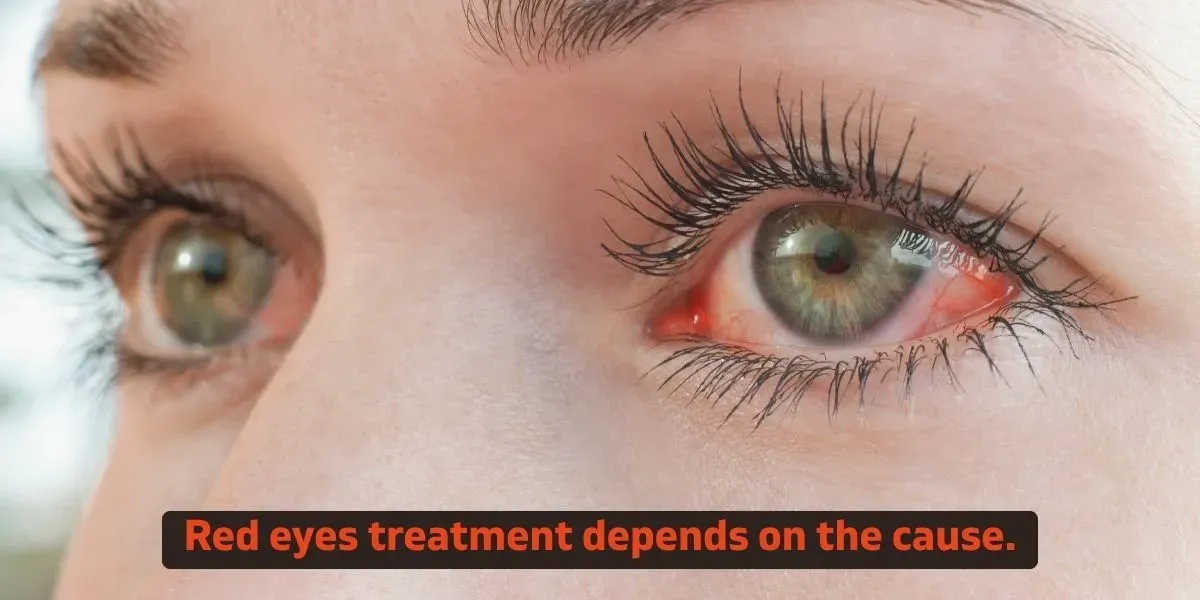
Red or bloodshot eyes happen when small blood vessels on the surface of the eye become inflamed or dilated. Sometimes both eyes look intensely red, sometimes just one, and sometimes the redness is patchy rather than all-over. Along with the colour change, you may notice burning, itching, watering, discharge, or light sensitivity — and how suddenly it appeared, and whether there's pain or vision change, helps your eye specialist pin down the cause.
Bright Red Blood Patch vs General Redness — Two Different Things
If your eye looks generally pink or bloodshot, that's typically inflammation-related redness — dryness, allergy, strain, or infection. But if you see a solid, bright red patch on the white of your eye with no pain, that's usually a subconjunctival haemorrhage — a small burst blood vessel, often from coughing, sneezing, straining, or rubbing. It looks dramatic but is typically harmless, needs no treatment, and fades like a bruise over one to two weeks.
Common Causes of Red Eyes
Dry Eyes
CommonInsufficient or fast-evaporating tears cause irritation, burning and redness. Often worsened by screens, ageing, or environment. Usually helped by lubricating drops and less screen time; chronic cases may need proper evaluation.
Digital Eye Strain
Very commonLong screen sessions reduce your blink rate, drying and straining the eyes. Often overlaps with dry eye. The 20-20-20 rule helps significantly.
Conjunctivitis (Eye Flu / Pink Eye)
Contagious if infectiousViral: red, watery eyes, often with a cold. Bacterial: sticky yellow/green discharge, matted lashes. Both are usually manageable with the right drops and hygiene — never self-treat with a steroid drop. Read more about eye flu.
Allergies
CommonDust, pollen, pet hair or cosmetics trigger itching, redness and watering. Improves once the irritant is removed and with anti-allergy drops. Avoid rubbing — it worsens irritation and can damage the cornea.
Contact Lens Irritation
CommonOverwear or poor lens hygiene irritates the eye surface and raises infection risk. See our contact lens problems guide for prevention tips.
Blepharitis (Eyelid Inflammation)
CommonOily, infected or inflamed eyelids cause redness, crusting and burning on waking. Warm compresses and lid hygiene usually help; often coexists with dry eye.
Subconjunctival Haemorrhage
Usually harmlessA burst small blood vessel causing a bright red patch, usually painless. Resolves on its own in 1-2 weeks. See a doctor if it recurs often or comes with pain.
Uveitis
Needs prompt careInflammation inside the eye causing redness with pain and blurred vision, sometimes linked to autoimmune conditions. Needs medical evaluation, not home care.
Acute Angle-Closure Glaucoma
EmergencySudden severe pain, blurred vision, halos around lights, headache, nausea. Eye pressure spikes fast and can damage the optic nerve quickly. Go to hospital immediately.
Is One Eye Red or Both? A Quick Clue
| Pattern | Often Points To |
|---|---|
| Both eyes, gradual | Dry eye, screen strain, allergy |
| Both eyes, sudden + watery | Viral conjunctivitis |
| One eye, sticky discharge | Bacterial conjunctivitis |
| One eye, bright red patch, no pain | Subconjunctival haemorrhage |
| One eye, severe pain + halos | Acute glaucoma — emergency |
Home Remedies for Red Eyes
For mild redness without red-flag symptoms, these genuinely help:
Cold Compress
A clean, cold compress for 5-10 minutes constricts vessels and eases redness, swelling and fatigue.
Warm Compress
Best for blepharitis or lid-related dryness — loosens debris and unclogs oil glands.
Lubricating Drops
Artificial tears cool and hydrate eyes strained by screens or pollution.
Rest & Hydration
7-8 hours of sleep and enough water support natural tear production and recovery.
Avoid Irritants
Limit dusty, smoky or polluted spaces; use a humidifier in dry rooms; cut down contact lens wear time.
When Is Red Eye a Concern?
Red eye that lasts more than a day, or comes with any of these, needs prompt medical attention:
- Significant eye pain (not just mild irritation)
- Blurred vision or halos around lights
- Light sensitivity
- Thick discharge, or lashes stuck together
- Headache, nausea or vomiting alongside eye pain — go to hospital immediately, this can mean acute glaucoma
Red Eyes Treatment at Save Sight Centre
At Save Sight Centre, red eyes don't get a one-drop-fits-all approach — treatment is matched to your specific cause. For dry eyes, that may mean lubricating and anti-allergy drops; for infections, targeted antibiotic or antiviral drops; and for serious causes like glaucoma or uveitis, prompt pressure-lowering or anti-inflammatory treatment. NABH and ISO accredited, with experienced specialists and modern diagnostics under one roof.
Dr. Shuchi GuptaCataract (Phacoemulsification) · LASIK · Glaucoma · Anterior Segment Specialist
"The pattern I always ask about is timing and pain. A red eye that's been the same for a day, with no real pain, is usually manageable. A red eye with sudden severe pain, blurred vision or nausea is a different story entirely — that's not a 'wait and see' situation, that's a same-day visit."
FAQs About Red Eyes
No. Red eyes can be caused by many things besides infection — dry eyes, allergies, lack of sleep, digital eye strain, injury, a burst blood vessel, uveitis, or glaucoma. Since the cause varies so much, it's best not to guess and self-medicate.
Yes. Extended screen use reduces your blink rate, which dries out and strains your eyes, commonly leading to redness, burning and heaviness — often called digital eye strain.
Red eyes from viral or bacterial conjunctivitis are contagious. Redness from dry eye, allergies, uveitis, glaucoma or a burst blood vessel is not. When infection is present, avoid sharing towels, pillows and cosmetics.
No. Redness-relieving drops only mask symptoms by shrinking blood vessels and can cause rebound redness. A steroid drop used without medical guidance can worsen an underlying infection and raise eye pressure. Match the drop to the actual cause.
See a doctor promptly if redness lasts more than a day, or comes with significant pain, blurred vision, light sensitivity, discharge, or halos around lights. These can indicate keratitis, uveitis, or acute glaucoma.
Eye irritation is typically caused by dryness, allergens or strain, and usually settles with rest and lubricating drops. A red eye infection involves bacteria or viruses and often includes discharge, swelling, crusting or pain, needing medical diagnosis.
This is usually a subconjunctival haemorrhage — a small blood vessel bursting under the clear surface of the eye, often from coughing, sneezing, straining or rubbing. It looks alarming but is typically painless and harmless, resolving on its own within one to two weeks. If it recurs often or comes with pain, see an eye specialist.
Yes. Poor sleep reduces the eyes' overnight recovery and tear production, while stress can affect hormone levels in ways that contribute to dryness and eye strain, both of which commonly show up as redness.
No. Redness-relieving drops are meant for occasional use only. Regular daily use can cause rebound redness, making your eyes more irritated and dependent on the drops over time.
A single red eye often points to a localized cause — a foreign object, a burst blood vessel, an infection, or injury in that specific eye. It's still worth getting checked if it's accompanied by pain, vision changes, or doesn't improve within a day.
Redness Not Settling Down?
Get the right diagnosis and the right drop at Save Sight Centre, Adarsh Nagar, North Delhi.
Disclaimer: For general awareness only, not medical advice. If you have sudden severe eye pain, vision loss, or nausea with red eye, seek emergency care immediately. Please consult an eye specialist at Save Sight Centre for a proper diagnosis. Results vary by person.