
 +91-9210-914-391
 WhatsApp

 Book Appointment
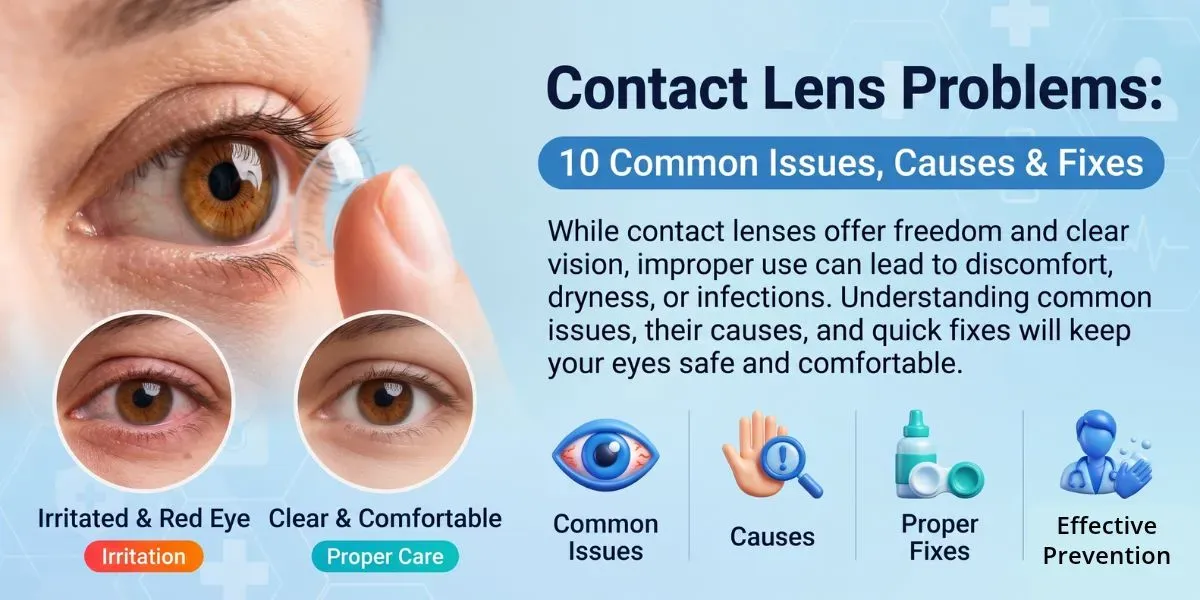
Contact Lens Problems: 10 Common Issues, Causes & Fixes
Burning, redness, a gritty feeling, or blurry vision by evening — if you wear contact lenses, you've probably faced at least one of these. Here's what's actually causing each common contact lens problem, what you can do about it at home, and the warning signs that mean it's time to see a specialist.

Quick Answer
The most common contact lens problems are dryness, burning, redness, a gritty foreign-body sensation, and blurred vision — most caused by reduced oxygen to the cornea, lens deposits, expired solution, or wearing lenses longer than prescribed. Most of these are preventable with proper hygiene. However, pain, unusual redness, discharge, or sudden blurred vision can signal a corneal infection and need same-day medical attention.
Key Takeaways
- Most contact lens problems — dryness, mild redness, grittiness — are caused by hygiene lapses or overwear, and are easily preventable.
- Blurred vision and burning are often linked to reduced oxygen reaching the cornea (hypoxia) from extended lens wear.
- Sleeping in regular contact lenses is one of the single biggest risk factors for infection.
- Keratitis (corneal infection) is the most serious complication and needs same-day medical attention.
- Daily disposable lenses carry the lowest risk of both dryness and infection among lens types.
Why Do Contact Lenses Cause Problems in the First Place?
A contact lens sits directly on the surface of your eye, resting on a thin layer of tears. That's what makes it comfortable and convenient — but it also means the lens can trap debris, block some oxygen from reaching the cornea, dry out over the day, or carry bacteria if it isn't handled correctly. Most contact lens problems trace back to one of three root causes: reduced oxygen supply to the cornea, hygiene lapses during handling or storage, or overwearing lenses beyond their prescribed schedule.
The good news: once you know which of these is behind your symptom, the fix is usually straightforward.
What Are the Most Common Contact Lens Problems?
Here are the 10 issues eye specialists see most often in contact lens wearers, along with the likely cause and what to do about each.
Burning and Itching Eyes
Watch closelySensitivity to the lens material, residual cleaning solution on the lens, or an allergic reaction. Burning that appears within seconds of insertion often points to solution residue rather than the lens itself.
What to doRinse the lens again in fresh solution before reinserting. If itching or burning continues across multiple wears, ask your eye specialist about switching lens material or solution brand.
See a doctor ifBurning is accompanied by mucous discharge, swelling, or doesn't ease after removing the lens.
Redness of the Eyes
CommonBuildup of dust, pollen, smoke or debris on the lens surface, prolonged wear, or mild irritation from a lens that doesn't fit optimally.
What to doRemove the lens, clean it thoroughly, and give your eyes a few hours' break in glasses. Maintaining strict lens hygiene resolves most redness.
See a doctor ifRedness is severe, one-sided, painful, or paired with light sensitivity — these can indicate infection or inflammation, not just irritation.
Blurred Vision
Watch closelyA dirty, scratched or inside-out lens, a lens that has dried out or shifted off-centre, or corneal swelling from oxygen deprivation (hypoxia) after extended wear.
What to doRemove the lens, check it isn't inside out or torn, clean it, and reinsert. Lubricating drops can help if dryness is the cause.
See a doctor ifBlurring is sudden, persistent, or comes with eye pain or redness — this needs prompt evaluation for corneal hypoxia or infection.
Grittiness or Foreign-Body Sensation
CommonDebris trapped under the lens, or an early sign of dry eye or an allergic response.
What to doRemove the lens, clean both sides with solution, and rinse your eye with sterile saline before reinserting.
See a doctor ifGrittiness returns repeatedly even after cleaning — this warrants ruling out dry eye disease or allergic conjunctivitis.
Dry Eyes
Very commonAlmost every contact lens wearer experiences some degree of dryness, since the lens interferes with the eye's natural tear film. Screen use, air conditioning and longer wear hours make it worse.
What to doSwitch to daily disposable or silicone hydrogel lenses (both hold less protein buildup), use preservative-free lubricating drops, and follow the 20-20-20 rule during screen-heavy days.
See a doctor ifDryness is constant, worsening, or affecting your ability to wear lenses comfortably at all — you may need a formal dry eye assessment.
Difficulty Inserting or Removing Lenses
CommonImproper lens fit, dry eyes, or simply inexperience in the first few weeks of wearing lenses.
What to doFor insertion, avoid blinking as the lens approaches your eye and hold your eyelids gently open. For removal, add a drop of lubricant first, then slide the lens onto the white of your eye before lifting it out.
See a doctor ifThe difficulty persists after a few weeks of practice — your fit or lens type may need adjusting.
Reduced Oxygen to the Cornea (Hypoxia)
Watch closelyThe cornea has no blood supply of its own — it draws oxygen from tears and the air. Lenses worn too long, especially overnight, physically block part of this oxygen supply.
What to doStick strictly to your recommended daily wear time (usually up to 8 hours) and ask your specialist about high-oxygen-permeability lens materials if you need longer wear.
See a doctor ifYou notice persistent redness, blurred vision, or discomfort that builds up over weeks — chronic hypoxia can lead to corneal changes over time.
Eye Infections (Keratitis)
UrgentBacteria, fungi or amoebae introduced through poor hygiene — using tap water, sleeping in lenses, or reusing expired solution are the biggest risk factors. Keratitis is the most common and most serious contact lens-related eye infection.
What to doStop wearing the lens immediately and switch to glasses. This is not something to manage at home.
See a doctor ifAlways — the same day. Symptoms include pain, marked redness, discharge, light sensitivity and blurred vision. Untreated keratitis can scar the cornea and threaten vision.
Allergic Reactions to Solution or Eye Makeup
Watch closelySensitivity to preservatives in lens solution, or makeup particles (especially kohl or eyeliner on the waterline) transferring onto the lens surface.
What to doSwitch to a preservative-free or hydrogen-peroxide-based solution, and always insert lenses before applying makeup, never after. Avoid oil-based products and never apply liner on the inner waterline.
See a doctor ifSwelling, persistent redness or itching continues despite switching products.
Corneal Abrasion or Injury
UrgentA torn lens, long or sharp fingernails during insertion/removal, or rubbing the eyes with a lens in place.
What to doRemove the lens immediately and switch to glasses. Do not rub the eye further.
See a doctor ifAlways — abrasions can become infected quickly and need to be examined and, if needed, treated with antibiotic drops.
How Can You Prevent Contact Lens Problems?
Nearly all of the problems above share the same root cause — a hygiene or wear-schedule lapse. Building these six habits prevents most issues before they start:
Wash your hands, every single time
Clean, dry hands before touching your lenses — no exceptions, even in a hurry.
Use only fresh, sterile solution
Never tap water or saliva, and never "top off" old solution in the case — always empty and refill.
Follow your replacement schedule exactly
Daily, fortnightly or monthly lenses should be discarded on schedule, even if they still feel fine.
Never sleep in regular lenses
Unless your doctor has specifically prescribed extended-wear lenses, always remove lenses before bed.
Replace your lens case every 3 months
Clean it daily with solution and let it air-dry — bacteria can build up on the case surface even when it looks clean.
Keep up scheduled eye check-ups
See your eye specialist for contact lens reviews even when everything feels normal — early changes are easiest to catch during a routine check.
Who Is Most at Risk of Contact Lens Problems?
Anyone can develop a contact lens problem, but risk rises sharply with certain habits and lens types.
Those who sleep in lenses
Long screen-time users
Swimmers wearing lenses
Extended-wear lens users
When Should You Stop Wearing Contacts and See a Doctor?
Remove your lenses immediately, switch to glasses, and see an eye specialist the same day if you experience:
- Eye pain or a persistent foreign-body sensation
- Unusual or worsening redness
- Blurred vision that doesn't clear after removing the lens
- Discharge, excess tearing, or crusting
- Increased sensitivity to light
- Any symptom appearing suddenly or getting worse over a few hours
These can signal a corneal infection such as keratitis, which needs prompt treatment to prevent lasting damage to your vision.

Dr. Shuchi GuptaCataract (Phacoemulsification) · LASIK · Glaucoma · Anterior Segment Specialist
"Most contact lens problems we see at Save Sight Centre come down to two things — sleeping in lenses, and reusing old solution. Both are completely avoidable. If your eyes feel uncomfortable more days than not, don't just push through it: get your lens fit and prescription reviewed. It's often a simple change in lens type or solution that solves months of ongoing irritation."
Frequently Asked Questions About Contact Lens Problems
The most common contact lens problems are dryness, burning or itching, redness, a gritty foreign-body sensation, and blurred vision. Most of these are caused by reduced oxygen reaching the cornea, lens deposits, expired solution, or lenses worn longer than recommended. Less common but more serious problems include allergic reactions and infections such as keratitis.
Burning shortly after inserting lenses is often caused by residual cleaning solution, a torn or dirty lens, or sensitivity to the lens material. Burning that develops over the day usually points to dryness or reduced oxygen supply to the cornea. If burning is severe, doesn't ease after removing the lens, or comes with discharge, see an eye specialist promptly, as it could signal an infection.
Blurred vision with contacts is commonly caused by a dirty, scratched, or inside-out lens, a lens that has dried out or shifted off-centre, or corneal swelling from wearing lenses too long. Persistent or sudden blurring, especially with pain or redness, needs urgent evaluation as it can indicate corneal hypoxia or infection.
Used correctly, contact lenses are safe for the vast majority of wearers. Permanent damage is rare but can occur with severe or repeated infections such as microbial keratitis, particularly when lenses are overworn, slept in, or cleaned with tap water. Scarring from an untreated corneal infection can affect vision permanently, which is why prompt treatment of any infection symptom is essential.
Warning signs of a contact lens-related eye infection include unusual redness, eye pain, blurred vision, excessive watering or discharge, increased light sensitivity, and a feeling that something is stuck in the eye. If you notice any of these, remove your lenses immediately, switch to glasses, and see an eye specialist the same day — infections like keratitis can progress quickly.
Mild dryness towards the end of a long wear day is common, especially with screen use, air conditioning, or extended wear time. However, if dryness is significant, daily, or accompanied by redness and grittiness, it may indicate you need a different lens material, a shorter wear schedule, preservative-free lubricating drops, or an underlying dry eye condition that should be assessed by an eye doctor.
Sleeping in regular soft contact lenses is not recommended and significantly increases the risk of corneal infection, because the closed eyelid reduces oxygen and tear flow to the cornea. Only lenses specifically approved and prescribed for extended or overnight wear should ever be slept in, and only under an eye specialist's guidance.
Replace your contact lens case at least once every three months, even if it looks clean, since bacterial biofilm can build up on the case surface over time. Clean the case daily with fresh solution, never tap water, and let it air-dry upside down rather than closing it wet.
Most contact lens problems are preventable with consistent hygiene: washing hands before handling lenses, using only fresh sterile solution, following your prescribed replacement schedule, never sleeping in regular lenses, replacing your lens case regularly, and attending scheduled eye check-ups even without symptoms.
Stop wearing your contact lenses immediately and see an eye doctor if you notice eye pain, unusual redness, blurred vision that doesn't clear, discharge, excessive light sensitivity, or a feeling that something is stuck in your eye that doesn't resolve after removing the lens. These can be signs of a corneal infection that needs prompt treatment.
Struggling With Contact Lens Discomfort?
Get your lenses, fit and eyes checked at the Save Sight Centre Contact Lens Clinic, Adarsh Nagar, North Delhi. NABH & ISO accredited · 15+ years · 1,70,000+ patients treated.
Disclaimer: The information on this page is for general awareness and should not be considered medical advice. Please consult an eye specialist at Save Sight Centre for a diagnosis and treatment plan suited to your eyes. Results can vary from person to person.