
 +91-9210-914-391
 WhatsApp

 Book Appointment
Vitamins for Eye Health: What Actually Works (and What Doesn't)
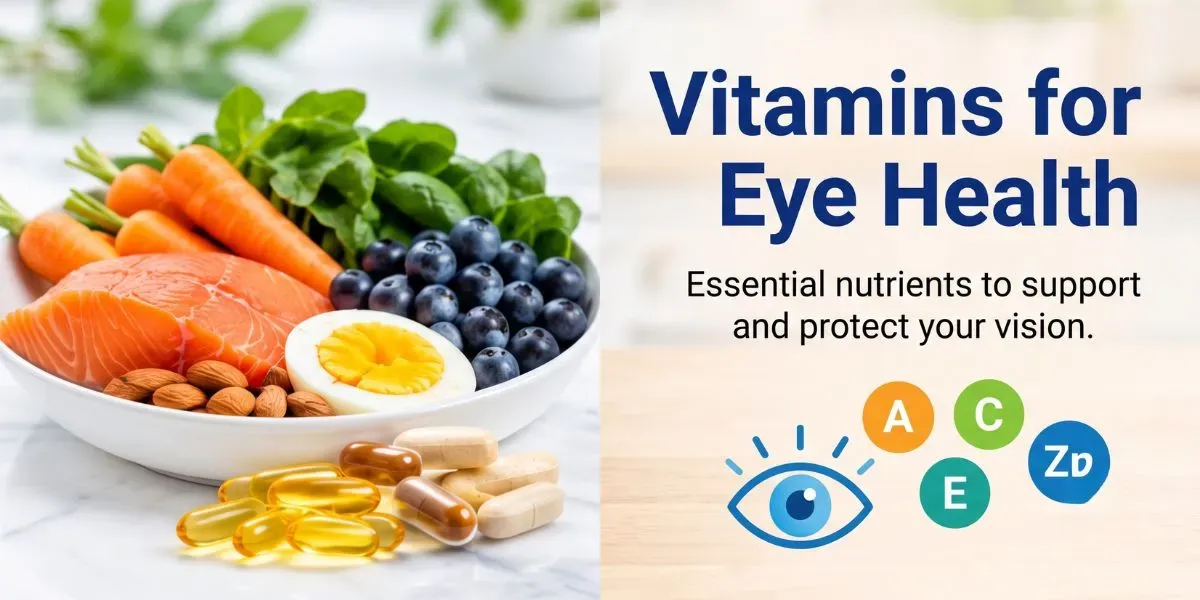
"Eat your carrots" is only part of the story. Here's what vitamins A through E, lutein, zeaxanthin, zinc and omega-3s genuinely do for your eyes, the one supplement combination with real clinical trial evidence behind it, and the safety cautions most vitamin articles skip entirely.

Quick Answer
Vitamins A, C, E, the B-complex, lutein, zeaxanthin, zinc and omega-3 fatty acids all support different aspects of eye health, from night vision and tear production to protecting against cataracts and retinal ageing. A balanced diet covers most people's needs. The one supplement combination with real clinical trial evidence — the AREDS2 formula — is specifically for people already diagnosed with intermediate age-related macular degeneration, not a general-purpose "eye vitamin" for everyone.
Key Takeaways
- Vitamin A supports night vision and eye surface moisture; deficiency causes night blindness.
- Vitamins C and E are antioxidants that help protect against cataracts and retinal ageing.
- Lutein, zeaxanthin and omega-3s support the retina and filter harmful blue light.
- AREDS2 is the only eye supplement formula with strong clinical evidence — and only for diagnosed intermediate AMD.
- More isn't always better: excess vitamin A can be toxic, and beta-carotene is specifically risky for smokers.
- A balanced diet covers most people's needs — supplements should generally follow a doctor's recommendation, not guesswork.
Key Vitamins & Nutrients for Eye Health
Vitamin A (Retinol)
Keeps the eye surface moist, protects the cornea, and supports vision in low light. Deficiency causes night blindness.
Sources: carrots, spinach, broccoli, pumpkin, eggs, cod liver oil
Vitamin B Complex
B1, B2, B3, B6 and B12 support nerve function, including the optic nerve, and help protect against inflammatory changes and glaucoma-related damage.
Sources: leafy greens, legumes, dairy, eggs, chicken, fish, organ meats
Vitamin C
A powerful antioxidant supporting collagen synthesis in the cornea and sclera, and linked to reduced cataract and macular degeneration risk.
Sources: citrus fruits, kiwi, strawberries, peppers, broccoli, tomatoes
Vitamin D
Has anti-inflammatory properties, with emerging (though less definitive) evidence for a protective role against dry eye and retinal degeneration.
Sources: sunlight, egg yolk, fatty fish, fortified milk
Vitamin E
An antioxidant that helps protect the eyes from oxidative stress linked to early cataract formation and retinal degeneration.
Sources: avocado, nuts, sunflower and soybean oil, leafy greens
Lutein & Zeaxanthin
Carotenoids concentrated in the retina that help filter harmful blue light and support macular health.
Sources: leafy greens, broccoli, pistachios, pumpkin, Brussels sprouts
Zinc
Helps transport vitamin A from the liver to the retina and is a core component of the clinically proven AREDS2 formula for macular degeneration.
Sources: shellfish, red meat, nuts, dairy, whole grains
Omega-3 Fatty Acids
Anti-inflammatory fats that support tear production and help protect the retina, particularly against diabetic retinopathy-related changes.
Sources: fish, flaxseeds, chia seeds, walnuts, soy, olive oil
Vitamin Deficiency → Eye Problem Quick Reference
| Deficiency | Possible Eye Problem |
|---|---|
| Vitamin A | Night blindness, dry eyes, corneal damage |
| Vitamin B12 / B complex | Blurred vision, eye fatigue, optic nerve issues |
| Vitamin C & E | Increased cataract risk |
| Lutein, zeaxanthin, zinc | Greater macular degeneration risk |
| Vitamin D | Possible link to dry eye, retinal changes |
| Omega-3 | Reduced tear production, dry eye symptoms |
AREDS2: The Only Eye Vitamin Formula With Real Clinical Evidence
Most "eye vitamin" claims are based on general nutritional logic. AREDS2 is different — it's a specific combination (vitamin C, vitamin E, zinc, copper, lutein and zeaxanthin) studied in a major clinical trial and shown to slow progression in people with intermediate to advanced age-related macular degeneration.
- It's not a general "take this to prevent eye disease" supplement — it's for people already diagnosed with intermediate or advanced AMD.
- It won't reverse existing damage, but can slow further progression in the right candidates.
- It should only be taken on your eye specialist's recommendation, after a proper retinal evaluation confirms it's appropriate for you.
⚠ Safety Notes: More Isn't Always Better
A few genuine cautions that most general "eye vitamin" articles skip:
- Vitamin A is fat-soluble and can accumulate to toxic levels with excessive supplementation, causing nausea, liver damage and bone problems over time.
- Beta-carotene supplements raise lung cancer risk in current and former smokers, based on findings from major clinical trials — smokers should choose eye supplement formulas without beta-carotene.
- High-dose supplements aren't automatically better than food-based nutrients, and unsupervised megadosing can cause more harm than the deficiency it's meant to fix.
- Always tell your doctor about any supplements you're taking, especially before starting a formula like AREDS2.
Diet vs Supplements: Which Do You Actually Need?
For most people, a balanced diet rich in colourful fruits and vegetables, whole grains, nuts and fatty fish provides everything the eyes need — supplements aren't automatically necessary just because you have eyes. Supplementation becomes genuinely useful when you have a confirmed deficiency, a diagnosed condition like intermediate AMD (via AREDS2), or a diet that consistently falls short of these nutrients. The best approach: eat well first, and let a doctor guide any supplement decisions based on your actual eye health, not a general assumption that "more vitamins" is always better.
When Should You See a Doctor?
Get an eye exam if you notice night vision difficulty, persistent dryness, blurred vision, or if you're considering supplements for a specific condition like macular degeneration. A comprehensive eye check, including a retinal examination, can confirm whether a nutritional issue is contributing to your symptoms and whether a targeted supplement like AREDS2 is actually appropriate for you.
Dr. Rajeev JainDirector · Retina, Cataract, LASIK & Uvea Specialist
"The AREDS2 formula is genuinely one of the best-studied interventions we have in ophthalmology — but I see patients self-prescribing it, or generic 'eye vitamins,' without ever having a retinal exam. These formulas are powerful tools for the right patient, not a blanket good habit for everyone. If you're considering any eye supplement beyond a basic multivitamin, get your eyes examined first."
FAQs About Vitamins for Eye Health
Vitamin A deficiency is the classic cause of poor eyesight, particularly night blindness and dry eyes, since it's essential for the retina's ability to adjust to low light and for keeping the eye's surface moist.
There's no single "best" vitamin — eye health depends on a combination of nutrients working together: vitamins A, C and E, the B-complex vitamins, lutein, zeaxanthin, zinc and omega-3 fatty acids. For age-related macular degeneration specifically, the AREDS2 formula has the strongest clinical trial evidence.
Vitamin A keeps the eye's surface moist and supports low-light vision. Vitamins C and E are antioxidants that help protect the eyes from oxidative stress linked to cataracts and age-related retinal degeneration.
Eye vitamins are best obtained through a balanced diet. Supplements are useful if you have a diagnosed deficiency, a specific eye condition like intermediate AMD, or a diet genuinely lacking in these nutrients — ideally with a doctor's guidance rather than self-prescribed.
Yes. Vitamin A deficiency can cause night blindness, persistent dryness, and in severe, prolonged cases, permanent vision loss due to corneal damage.
AREDS2 is a specific, clinically studied combination of vitamin C, vitamin E, zinc, copper, lutein and zeaxanthin, shown to slow progression of intermediate to advanced age-related macular degeneration. It's specifically for people already diagnosed with intermediate or advanced AMD, and should only be taken on your eye specialist's recommendation.
Yes. Vitamin A is fat-soluble and can build up to toxic levels with excessive supplementation. Separately, high-dose beta-carotene supplements have been linked to increased lung cancer risk in current and former smokers, who are advised to choose formulas without it.
Vitamin B complex supports nerve function, including the optic nerve, and a deficiency can contribute to blurred vision and eye fatigue. If your levels are already adequate, taking more is unlikely to further reduce fatigue from other causes like screen strain.
Vitamin D has anti-inflammatory properties and is being studied for a possible protective role against dry eye, cataract formation and retinal degeneration, though evidence is less definitive than for vitamins A, C and E.
For most people, a balanced diet rich in colourful fruits and vegetables, whole grains, nuts and fatty fish provides all the nutrients needed, making routine supplementation unnecessary. Supplements become useful for a confirmed deficiency or a diagnosed condition like intermediate AMD.
Wondering If You Need an Eye Supplement?
Get a comprehensive eye and retinal check-up at Save Sight Centre, Adarsh Nagar, North Delhi, before starting any supplement.
Disclaimer: For general awareness only, not medical advice. Do not start high-dose supplements, including AREDS2, without consulting an eye specialist. Please consult an eye specialist at Save Sight Centre before beginning any supplement, especially if you smoke or have an existing health condition. Results vary by person.